Salle Gaston Médecin
Monaco, Monaco
Nice France
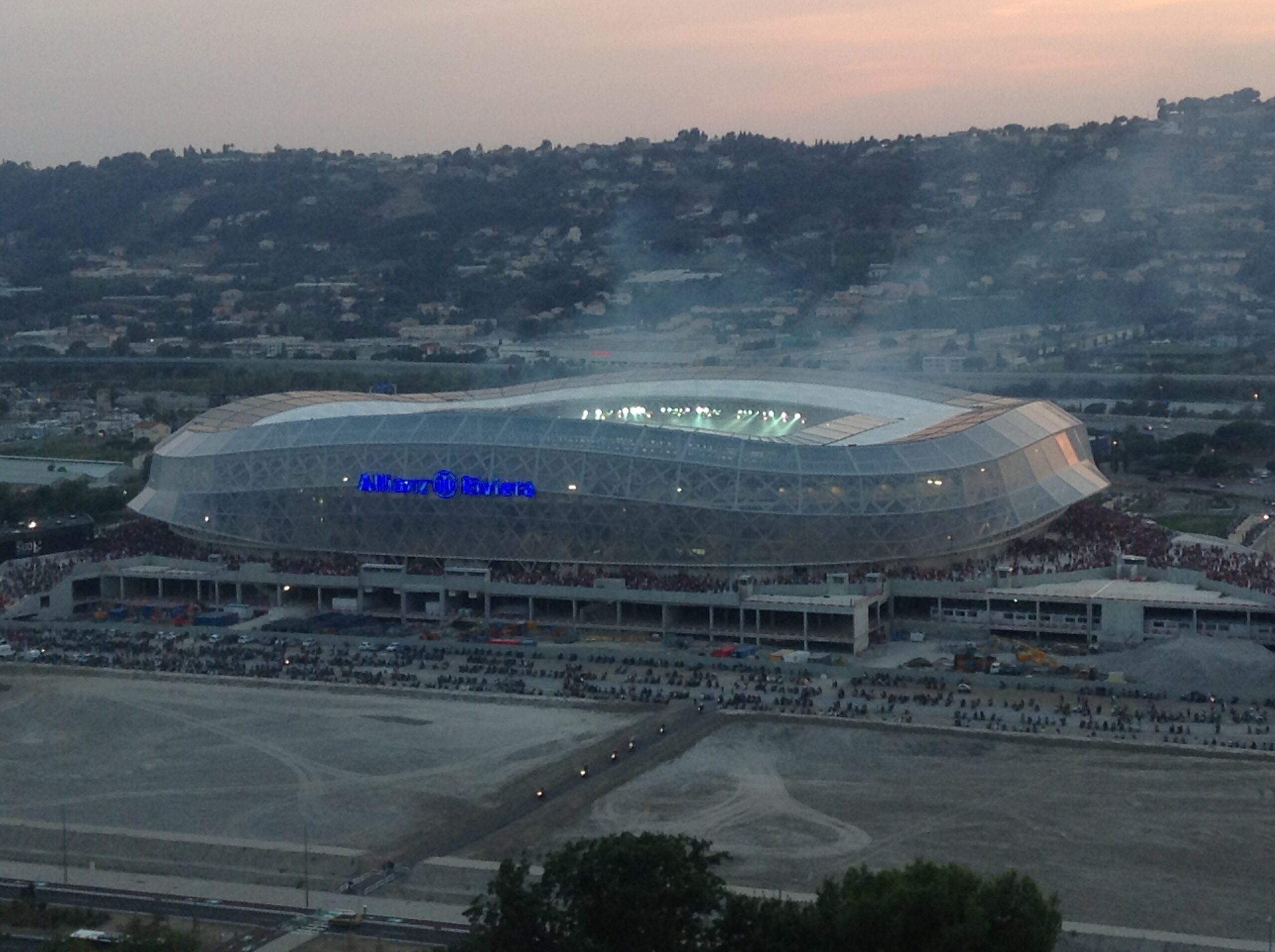
The Allianz Riviera, located in the coastal city of Nice, serves as the permanent home ground for French Ligue 1 football club OGC Nice. Boasting an official capacity of 36,178 spectators for football fixtures, this modern sports arena is classified as an UEFA Category 4 venue. Originally completed in September 2013 to replace the outdated Stade du Ray, the stadium stands out internationally for its pioneering eco-design, showcasing an intricate wood-steel hybrid structure and thousands of rooftop solar panels.
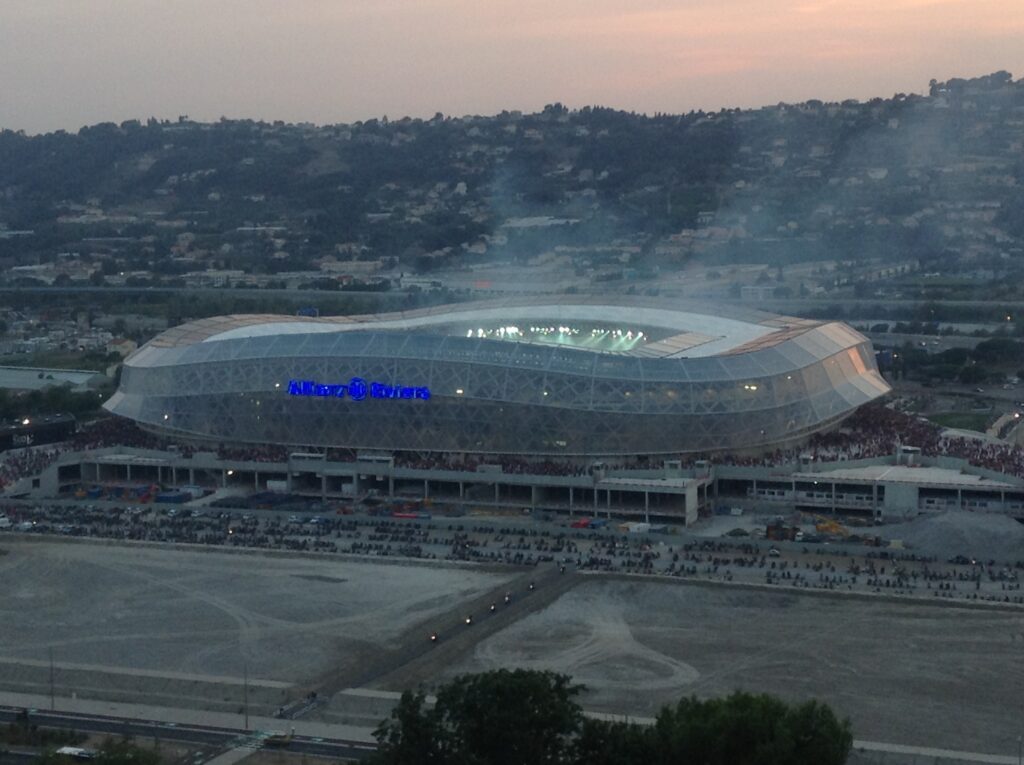
Par mirasol — travail perso, CC BY-SA 3.0, Lien
35.000
The project to construct a new sports arena in Nice arose due to the structural and safety limitations of the historical Stade du Ray, which had hosted OGC Nice since 1927. Following several canceled proposals in the early 2000s, the official construction process finally commenced in July 2011 after the city was selected as a host venue for the UEFA Euro 2016 championship. The design was formulated by the acclaimed firm Wilmotte and Associates, with construction works executed by the engineering group Vinci. Structural assembly progressed over a two-year timeframe, leading to the official inauguration ceremony on September 22, 2013. Since that opening date, the municipal government retains ownership of the land, while operational management is conducted under a long-term public-private partnership framework designed to establish a sustainable economic asset for the region.
The architectural layout of the venue features a highly unique wave-shaped exterior facade consisting of over 14,000 translucent aluminum and polycarbonate panels that mimic the rolling landscape of the Mediterranean coast. The inner supporting framework relies heavily on a three-dimensional lattice structure combining sustainable spruce timber with structural steel, creating a lightweight yet incredibly durable shell. Protection from the elements is delivered by a specialized Tenseo Advanced translucent roof membrane spanning 12,000 square meters, which optimizes the distribution of natural sunlight onto the pitch. Acoustically, the continuous, fully enclosed three-tier grandstand configuration is designed to amplify crowd chants, bounding vocal sound waves downward from the curved roof directly back toward the rectangular playing surface to maximize internal resonance.
The stadium operates commercially under the official title of Allianz Riviera, following a naming rights partnership signed in 2012 with the international German financial services group Allianz. Because European football governing bodies prohibit corporate naming during international tournaments, the venue is officially designated as the Stade de Nice during all UEFA and FIFA competitions. Local supporters and citizens frequently refer to the location as the Grand Stade de Nice or simply the Riviera, grounding the building in its geographical territory. The stadium identity is tightly interwoven with the heritage of OGC Nice, featuring a prominent pre-match eagle flying routine that celebrates the historical avian symbol emblazoned on the crest of the resident football club.
Since its initial construction in 2013, the stadium has maintained its primary layout without undergoing massive structural alterations, retaining its verified football capacity of 36,178 seats. The interior seating configuration is distributed across four distinct main grandstands named Garibaldi, Ray, Ségurane, and Sud, with the Ray and Garibaldi stands incorporating three tiers of seating. Premium facilities include 44 fully equipped VIP hospitality boxes divided equally with 22 units in the Western stand and 22 units in the Eastern stand, covering 10,000 square meters of premium event space. Safe standing solutions are integrated into the lower sections of the home supporter end to allow comfortable fan animations during domestic Ligue 1 fixtures.
The stadium has built a significant sports legacy by serving as a key host site for major international tournaments across different sports. During the UEFA Euro 2016 tournament, the arena hosted four matches, including the historic round of 16 fixture where Iceland famously defeated England 2-1 on June 27, 2016. The stadium also hosted six fixtures during the 2019 FIFA Women’s World Cup, highlighted by a thrilling penalty shootout victory for Norway against Australia. Beyond football, the venue was utilized for four group stage matches during the 2023 Rugby World Cup and hosted multiple competitive football matches during the 2024 Summer Olympics, including fixtures featuring the host nation France.
The venue is geographically positioned at Boulevard des Jardiniers in the Saint-Isidore district, located within the Var River valley approximately 6 miles northwest of the historic center of Nice. The surrounding area is part of the Eco-Valley development, an urban planning zone focused on sustainable commerce, residential projects, and modern business offices. On matchdays, the atmosphere in the immediate vicinity is focused on the large open concourses surrounding the arena rather than traditional tight neighborhood streets. Fans congregate around pop-up food trucks, outdoor activation zones, and the wide plazas facing the main entrances hours before the scheduled kickoff.
The most direct public transportation option from the city center is the Nice Tramway network, specifically utilizing Line T3 which runs from the airport and central hubs directly to the Stade stop located a short distance from the turnstiles. Alternatively, visitors can utilize Line T2, changing trains where appropriate to connect with matchday shuttle services. Regional trains operated by SNCF stop at the nearby Nice-Saint-Augustin railway station, which connects directly to the tram lines servicing the stadium campus. Accessible parking spaces are provided on-site in designated lots for individuals holding official disabled badges, and specific low-level access turnstiles are available at all main security sectors (all public transport schedules and route operations should be verified before your visit).
For groundhoppers and fans seeking premium, unobstructed views of the tactical action alongside comfortable amenities, seats in the mid-tier of the Ségurane or Garibaldi stands are highly recommended. Budget-conscious spectators usually choose tickets in the upper tiers of the Ray stand, which offer clean sightlines at a lower price point. The core of the passionate local fan culture is situated in the Tribune Sud, specifically the lower tier where the main ultra groups gather. Visiting away supporters are assigned to a secure visitor section located in the corner between the Tribune Données and the Tribune Sud, fully equipped with independent facilities and dedicated entry access.
Before entering the security perimeter, supporters frequently frequent the commercial spaces and eateries located within the adjacent Nice Valley shopping center, which hosts several restaurants and quick-service establishments. Inside the stadium concourses, refreshments are served via modern food kiosks offering a variety of standard snacks alongside local culinary options such as Socca, a traditional chickpea pancake specialty native to Nice. The official beverage options inside the public sectors include Heineken beer and a selection of non-alcoholic soft drinks, while premium regional wines from the Provence area are reserved for the hospitality lounges and VIP corporate suites.
Security operations at the stadium are thorough, requiring all ticket holders to pass through initial outer ticket checks, body pat-downs, and electronic bag screening before entering the turnstiles. In alignment with stadium regulations, large backpacks, professional camera equipment, and umbrellas with solid frames are prohibited, and no official bag drop facilities are provided outside. The venue utilizes card and contactless payment methods across its food kiosks and merchandising counters, making it highly advantageous to carry electronic payment cards. Gates typically open 90 minutes before the match starts, and an arrival of at least one hour before kickoff is highly recommended during high-profile matches against rivals like AS Monaco or Olympique de Marseille.
The main OGC Nice Boutique is integrated directly into the infrastructure of the stadium complex along the main boulevard facade, showcasing a complete collection of official jerseys, training apparel, and branded accessories. The club also operates a secondary, highly accessible retail shop in the heart of the city center located at Place Masséna. Fans can access merchandise globally through the official online retail website at any time. The stadium boutique operates standard daytime business hours during the week and remains open for roughly an hour following the conclusion of home matches, though these times can shift for evening games (all store hours should be verified before your visit).
The most convenient transit method is taking the Line T3 tram directly from central Nice to the dedicated Stade tram stop. The journey takes approximately 25 to 30 minutes and runs with increased frequency on scheduled matchdays.
Yes, the stadium houses the National Sports Museum, a massive facility displaying tens of thousands of historic artifacts from French sporting history. Visitors can purchase standalone tickets to the museum or buy a combined ticket that includes a stadium tour.
Away supporters are located in a designated visitor enclosure situated in the southeastern corner of the stadium structure. This section features dedicated security gating, separate restrooms, and independent food and beverage kiosks.
No, large bags and standard backpacks exceeding basic A4 paper dimensions are strictly prohibited by stadium security guidelines. Visitors are advised to travel light as there are no public luggage storage lockers available at the venue.
The verified seating capacity for an OGC Nice football match is 36,178 spectators. This capacity can adjust slightly depending on the event type, expanding to over 44,000 slots for large-scale musical concerts and entertainment events.