Palau Blaugrana
Barcelona, Spain
Barcelona Spain
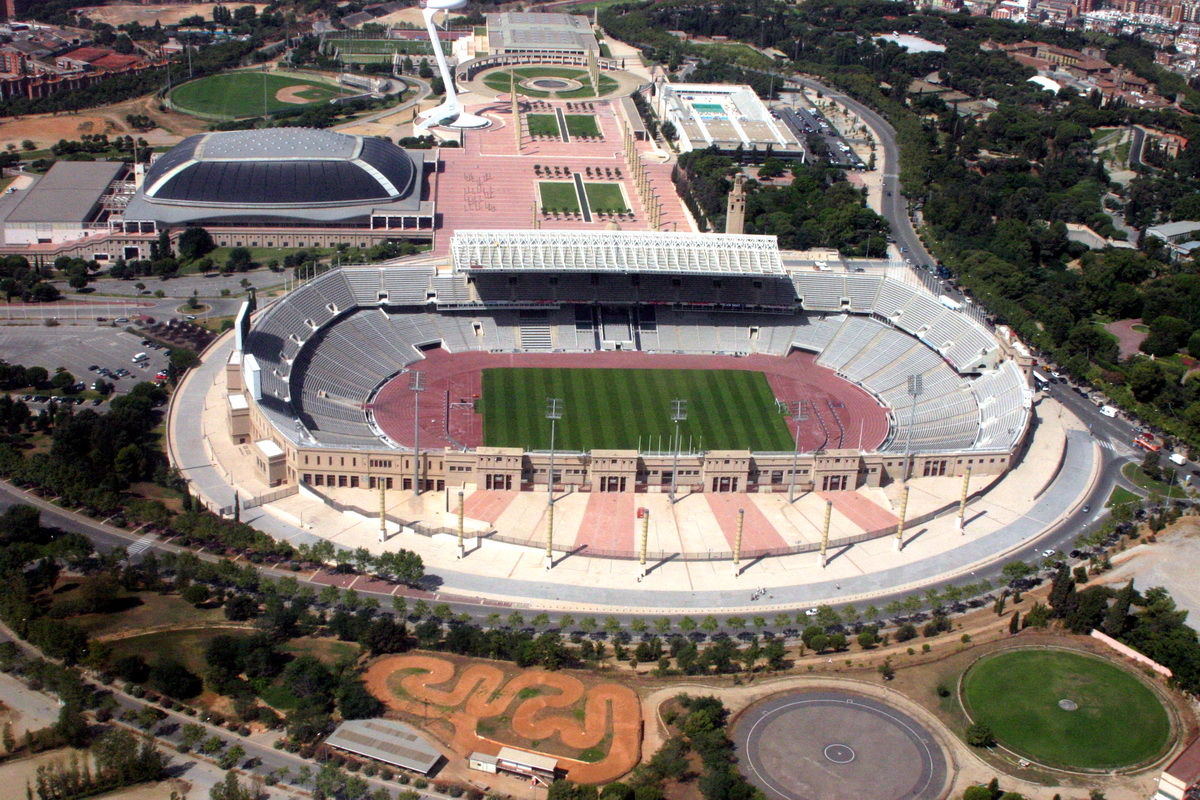
The Estadi Olímpic Lluís Companys is an iconic sports venue located in Barcelona, Spain, featuring an official seating capacity of 54,367 spectators. Positioned on the scenic hill of Montjuïc, this historic arena is classified as an UEFA Category 4 stadium and serves as a temporary home for Spanish La Liga club FC Barcelona. It stands out globally for its unique combination of a preserved 1929 classical facade and a fully modernized interior built to host the mid-century Olympic Games.
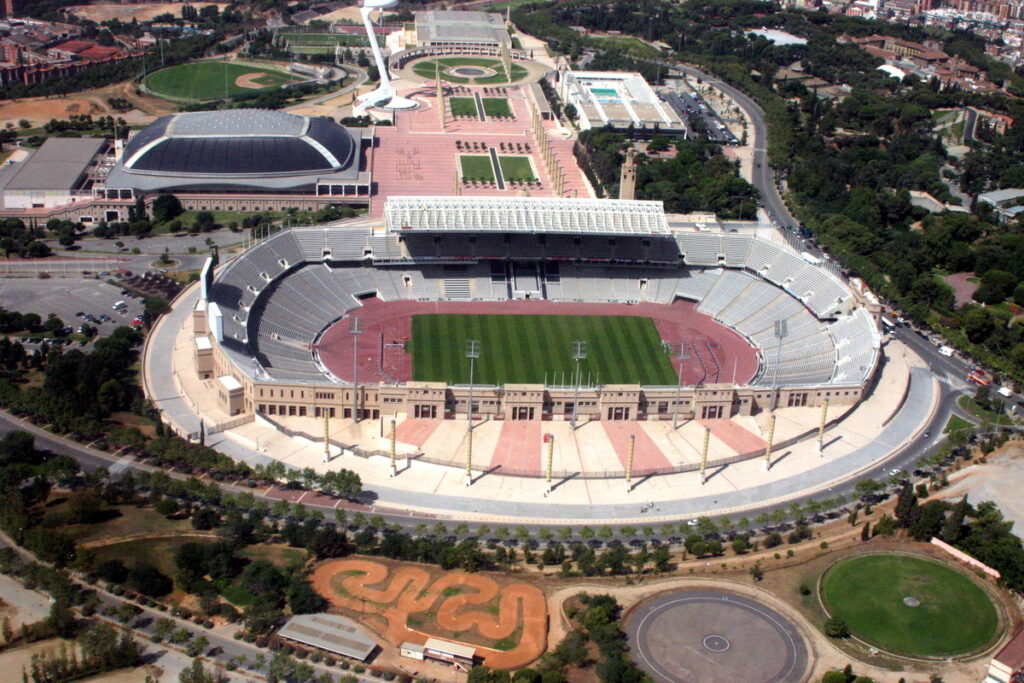
Par Amadalvarez — Travail personnel, CC BY 3.0, Lien
The construction of the venue began in the late 1920s under the direction of architect Pere Domènech i Roura, culminating in its official opening in May 1929 for the Barcelona International Exposition. The stadium was initially designed with the ambition of hosting future global multi-sport events, but it remained underutilized for several decades following its initial opening period. A monumental transformation occurred ahead of the late twentieth century when the city secured major international games, prompting a complete reconstruction between 1985 and 1989 led by an international team of architects including Vittorio Gregotti, Frederic de Correa, Alfons Milà, Carles Buixadé, and Joan Margarit. The structural overhaul preserved only the historic exterior facades, while the entire interior bowl was excavated and rebuilt to modern international sports standards.
The architectural design of the Estadi Olímpic Lluís Companys is characterized by its dual nature, marrying a historicist monumental exterior with a functional modernist interior. The seating bowl is a continuous, single-tier oval configuration designed to optimize sightlines for both track and field events and association football. The main grandstand features a distinctive cantilevered roof structure that provides shelter to the premium seating sections without requiring obstructive vertical support pillars. The primary building materials include reinforced concrete for the interior tiers and traditional stone and stucco for the preserved 1929 outer walls. Due to its open-air oval shape and the presence of a wide running track separating the stands from the pitch, the acoustics are dispersed, requiring significant sound reinforcement systems for concerts and large-scale public address announcements.
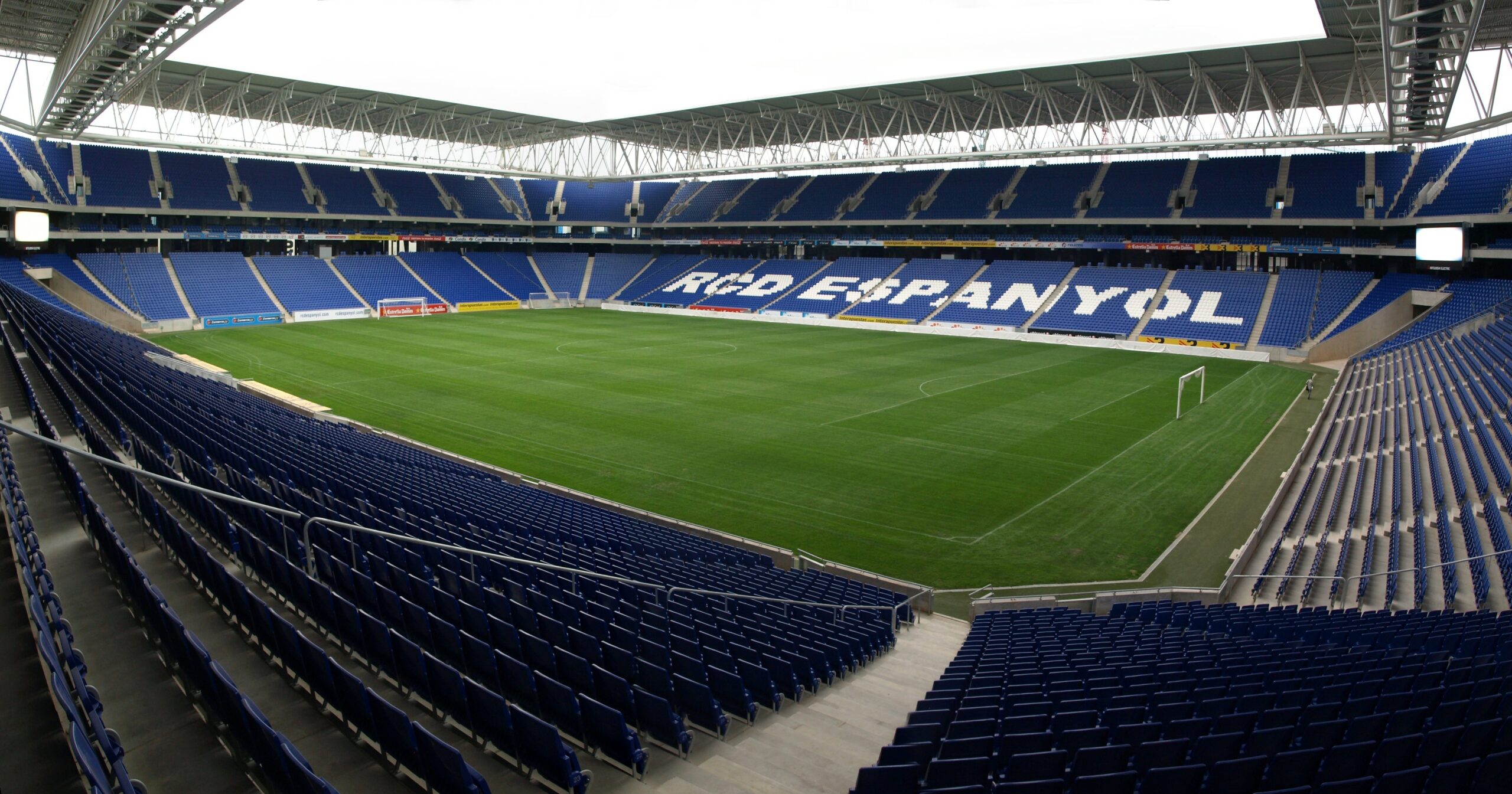
Originally known simply as the Estadi de Montjuïc due to its geographic location on the Montjuïc hill, the venue was officially renamed in 2001 to honor Lluís Companys, the former President of the Generalitat de Catalunya who was executed nearby at Montjuïc Castle in 1940. The stadium does not carry a commercial corporate naming sponsor, maintaining its institutional and historical nomenclature. Locally, the arena is frequently referred to as the Estadi Olímpic, emphasizing its association with the highest level of international amateur sports. For many years, football fans in Barcelona associated the ground with RCD Espanyol, the club that used the stadium as its primary home venue for over a decade before constructing their own dedicated arena in the metropolitan area.
The most comprehensive modernization phase occurred during the total interior reconstruction from 1985 to 1989, which established the core structural layout seen today and set the official capacity to over fifty-four thousand seats. The stadium seating is divided into four main sectors named Tribune, Lateral, North Goal, and South Goal. In preparation for temporary occupancy by FC Barcelona, the stadium underwent targeted logistical upgrades to meet contemporary Spanish top-flight and UEFA Champions League regulations. These modern adaptations included enhancing the media tribunes, upgrading the hospitality suites, expanding the VIP corporate boxes, and installing specialized hybrid turf over the pitch area. The stadium features an all-seater configuration, as standing terraces are not permitted under top-tier European football guidelines.
The venue has hosted numerous high-profile sporting events, most notably serving as the main stadium for the 1992 Summer Olympic Games, including the opening and closing ceremonies and the athletics competitions. In club football, it served as the home ground for RCD Espanyol between 1997 and 2009, hosting several local derbies against rivals FC Barcelona. The stadium has also been the stage for several Copa del Rey finals, including the 2004 final where Real Zaragoza defeated Real Madrid. Internationally, the stadium hosted official matches for the Andorra national football team, including fixtures against England during European championship qualifying campaigns. More recently, the arena has witnessed intense Spanish La Liga and UEFA Champions League fixtures during the temporary residency of FC Barcelona, keeping the hill of Montjuïc at the center of continental football.
The stadium is situated in the Sants-Montjuïc district of Barcelona, positioned on the southwest side of the city atop the Montjuïc hill, approximately four kilometers from the historic center and the central Plaza Cataluña. The surrounding neighborhood is characterized by expansive parklands, cultural institutions, and historical monuments rather than dense residential or commercial developments. Notable nearby landmarks include the Palau Sant Jordi indoor arena, the Joan Antoni Samaranch Olympic and Sports Museum, and the National Art Museum of Catalonia. On matchdays, the atmosphere develops along the winding avenues leading up the hill, where fans gather in the open park spaces and around the fountains near Plaza Espanya before ascending toward the stadium gates.
Accessing the stadium via public transportation requires utilizing the comprehensive Barcelona transit network. The nearest major transport hub is Plaza Espanya, which is connected by Metro Line 1, Metro Line 3, and various FGC suburban train lines. From Plaza Espanya, visitors can walk up the avenue using public escalators or board the dedicated Number 150 bus line that travels directly to the Olympic Ring. Alternatively, the Parallel Metro Station provides access to the Funicular de Montjuïc, which carries passengers up the hill to a station within walking distance of the stadium entrance. Special shuttle bus services are frequently operated on matchdays from major transit stations (à vérifier avant votre visite). The stadium provides designated accessible parking spaces and specific wheelchair-accessible ramps at designated entry gates for spectators with reduced mobility.
For the optimal viewing experience, tickets in the main Tribune or the opposite Lateral stand offer the best side-line perspective of the pitch, elevated sufficiently to minimize the visual obstruction caused by the running track. The upper rows of these central sections also provide panoramic views of the surrounding city skyline. Budget-conscious travelers and groundhoppers often prefer the North and South Goal stands, which offer a lower price point while placing spectators closer to the active fan groups. The local ultras and active singing sections are usually positioned in the lower tiers of the South Goal. Traveling away supporters are typically allocated a dedicated visitor section located in the upper tier of the North Goal, segregated according to standard UEFA and La Liga safety protocols.
While independent stadium tours inside the Estadi Olímpic Lluís Companys are heavily dependent on the active sports calendar and team training schedules, the Olympic Ring experience remains a major cultural attraction. Visitors can explore the adjacent Joan Antoni Samaranch Olympic and Sports Museum, which features interactive exhibits, historical artifacts, and detailed displays regarding the 1992 Games. Admission fees, guided tour availability, and specific access packages to the presidential box or locker rooms vary based on the resident club operations and ongoing stadium usage. The museum and surrounding outdoor Olympic plazas are generally open throughout the week, but access to the interior seating bowl is strictly restricted on matchdays to ticket holders only.
Because the stadium is located within a large public park, traditional neighborhood football pubs are scarce directly outside the stadium gates. Most matchday dining and drinking activities take place at the base of the hill around Plaza Espanya and along the streets of the Poble Sec neighborhood, which features numerous bars serving traditional Catalan tapas and Estrella Damm, the prominent local beer brand. Inside the Olympic Ring perimeter, official mobile food kiosks and fan zones are set up on event days, offering standard stadium fare such as hot dogs, burgers, bocadillos, and non-alcoholic beverages. A short distance from the stadium, the Las Arenas commercial center, a converted historic bullring at Plaza Espanya, provides numerous sit-down restaurants and fast-food options for pre-match or post-match meals.
Due to the steep geography of Montjuïc, visitors are highly recommended to arrive at least ninety minutes before kick-off to allow ample time for the uphill walk and the mandatory security screenings at the outer perimeter. The stadium operates a strict security policy where large backpacks, professional recording equipment, and glass bottles are prohibited, and bags smaller than A4 size are subject to manual inspection. High-risk fixtures, such as the Barcelona derby or major European ties, involve enhanced police presence and separate arrival routes for opposing fan bases. The food and beverage concourses inside the stadium utilize a cashless payment system accepting major credit cards and mobile contactless payments, making digital payment methods essential for purchasing refreshments during the event.
An official merchandise store is operated on the stadium grounds during major matchdays, located near the main ticket office structures to provide fans with jerseys, scarves, and souvenirs before entry. For a broader selection outside of event days, the resident clubs maintain flagship megastores in central Barcelona, including prominent locations near Passeig de Gràcia, La Rambla, and Plaza Cataluña. Merchandise can also be purchased continuously through the official online stores of the respective clubs. The exact operating hours of the stadium-adjacent retail kiosks on non-matchdays are subject to seasonal event schedules (à vérifier avant votre visite).
The official seating capacity of the stadium is 54,367 spectators, making it one of the largest sports venues in Spain and an elite UEFA Category 4 arena.
The stadium serves as the temporary home ground for Spanish La Liga club FC Barcelona while their historic Camp Nou stadium undergoes extensive reconstruction.
You can take Metro Line 1 or Line 3 to Plaza Espanya and then walk up the hill using the public escalators, or catch the local bus line 150 directly to the stadium gates.
Yes, numerous official concession stands and mobile kiosks operate inside the stadium concourse on matchdays, selling local snacks, sandwiches, and non-alcoholic beverages using a cashless payment system.
The exterior areas and the nearby Olympic and Sports Museum are open to the public, but interior access to the stands and pitch is subject to ongoing club schedules and event bookings (à vérifier avant votre visite).