Olympisch Stadion
Antwerp, Belgium
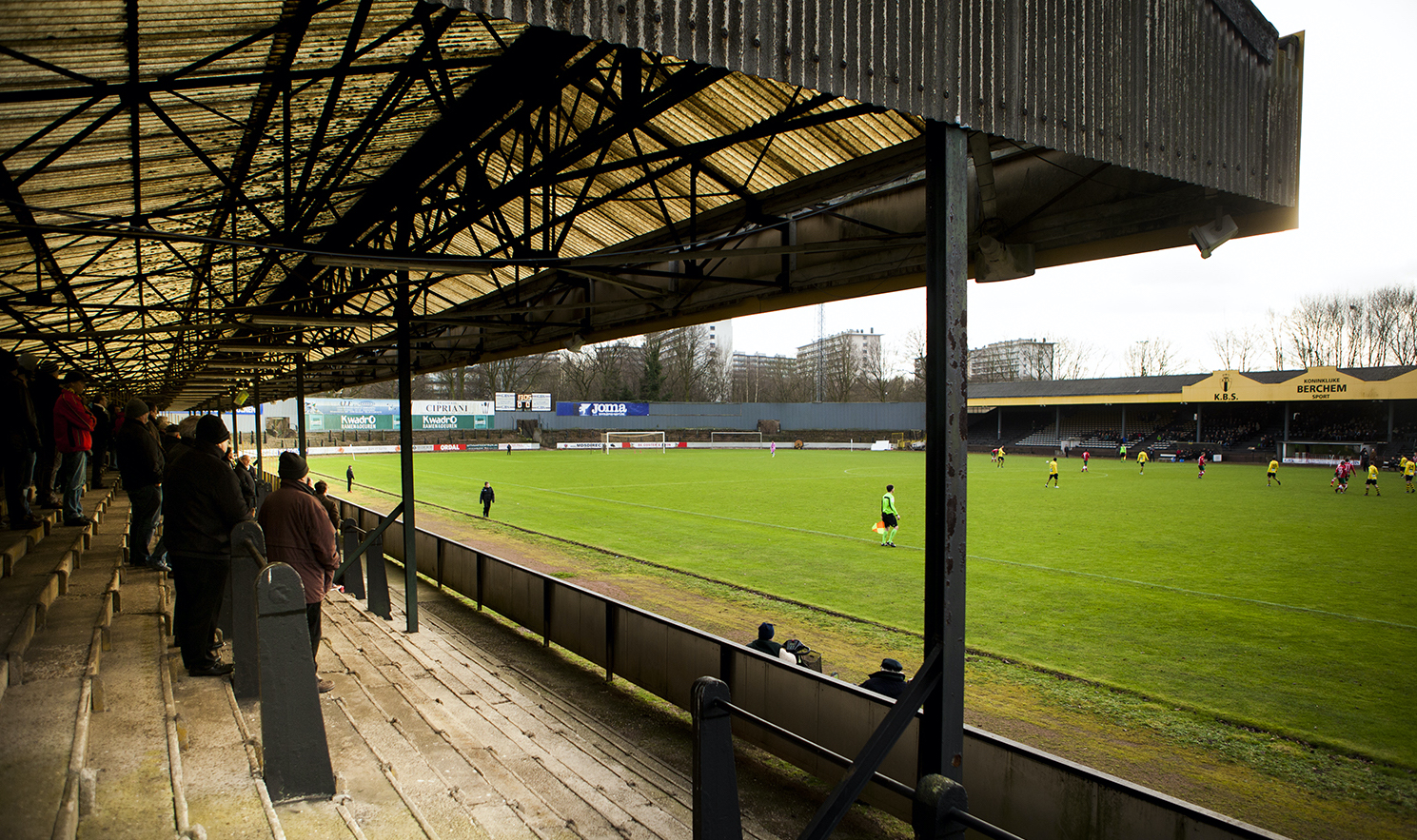
Berchem Belgium
Ludo Coeckstadion is a historic football ground situated in the Berchem district of Antwerp. Possessing a modern capacity of nearly three thousand seated spectators, the stadium serves as the permanent home of K. Berchem Sport. Located near the central city ring road, the venue remains one of the most culturally significant traditional arenas in Belgian football.
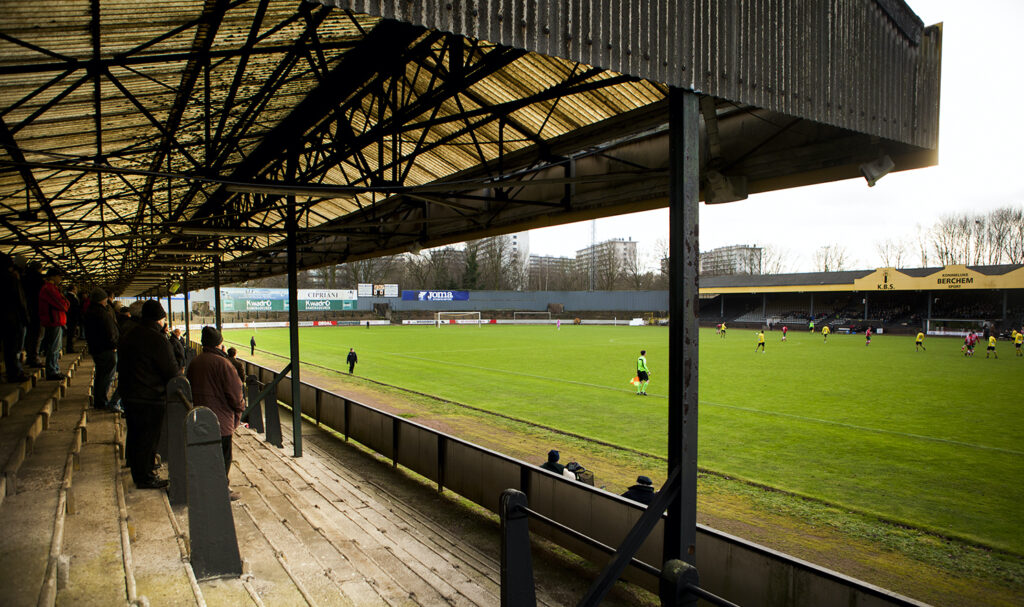
PitchdGroundhopping, CC BY-SA 4.0, via Wikimedia Commons
2.991
Construction began in the second half of the decade when local architects Frans Peeters and Egide Van der Paal designed a practical municipal venue. The facility was officially inaugurated in August 1929 under its original title of Berchem Stadium, featuring a high-profile opening friendly against Dutch club PSV Eindhoven. The property quickly acquired its famous colloquial name due to its placement alongside the local Rooi parkland. Structural ownership remained tied to municipal authorities and the resident club, ensuring decades of continuous domestic league competition. Structural decay led to the demolition of the legacy concrete embankments and covered standing terraces in 2018. A comprehensive redevelopment plan replaced the declining stands with modern covered grandstands to ensure long-term safety and compliance with national league standards.
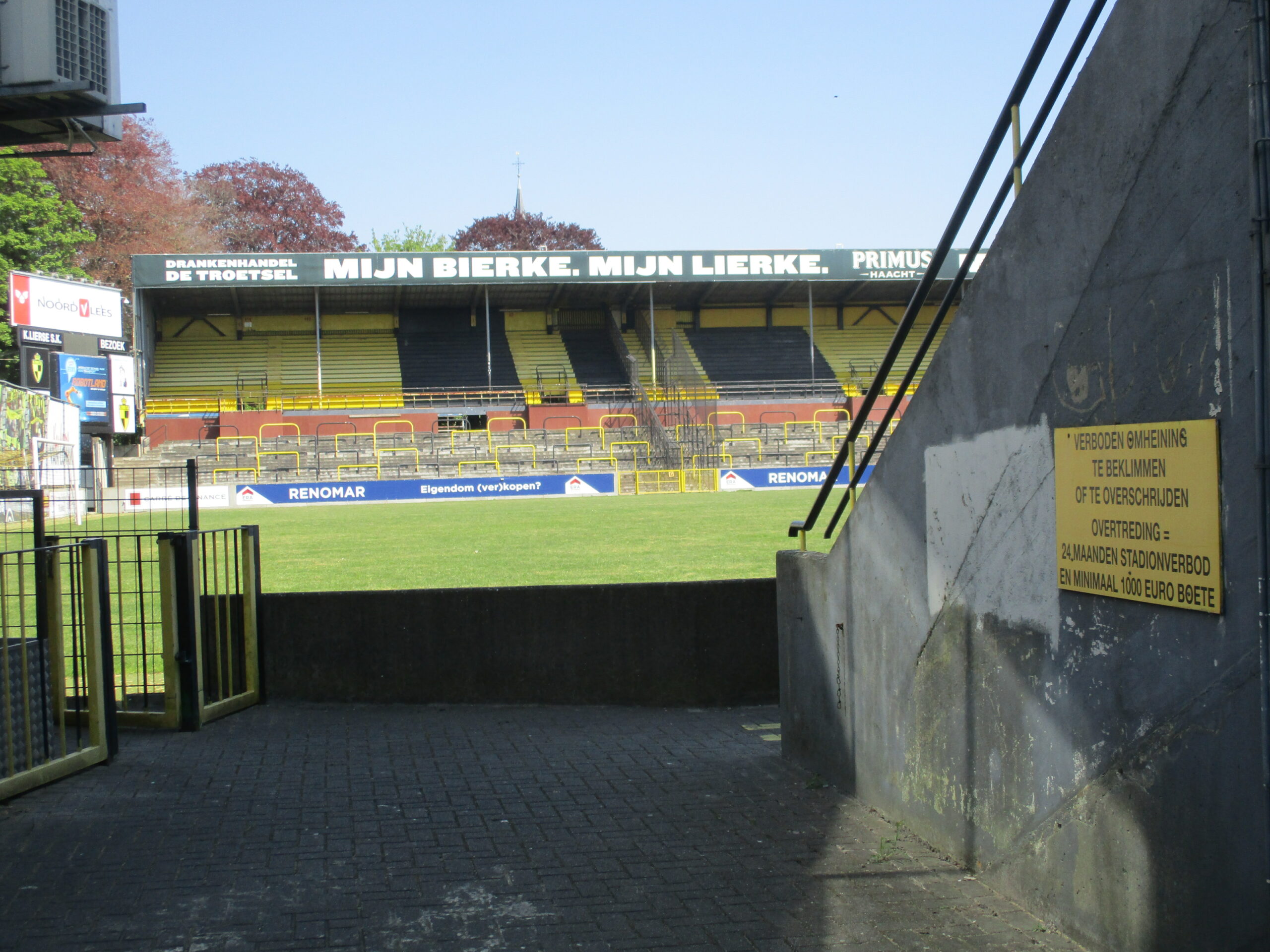
The architectural layout was originally designed as a classic open oval featuring concrete terraces curving behind both goal lines and a central running track surrounding the grass pitch. The defining architectural centerpiece is the iconic brick entrance gateway inspired by a Roman triumphal arch, adorned with historic art deco lettering spelling out the original stadium title. Modern redevelopment replaced the historic earthwork embankments with compact modular grandstands constructed from precast concrete blocks, galvanized steel framing, and sound-absorbing composite roof sheeting. The current arrangement brings spectators closer to the pitch margins than in previous decades. Acoustically, the high metal roofs of the modern grandstands trap fan noise, amplifying supporters chants across the playing field while protecting match attendees from prevailing coastal rainfall.
The official stadium title honors Ludo Coeck, the gifted Belgian international midfielder who began his competitive youth football career at K. Berchem Sport before transferring to Anderlecht and Inter Milan. The venue was officially renamed in his honor to recognize his lasting legacy following his tragic passing in a car accident in 1985. The traditional nickname of the ground is Het Rooi, derived from the surrounding parkland and district geography in Antwerp. Supporters of K. Berchem Sport are affectionately known as De Geel-Zwart or The Yellow and Blacks due to the club traditional primary colors. The club identity is rooted in neighborhood pride, serving as the historical counterweight to larger urban rivals in the broader metropolitan area.
Historic capacity figures originally reached twenty thousand during peak twentieth-century fixtures, which later reduced to approximately thirteen thousand as safety regulations tightened. Complete demolition of the unstable legacy terraces reduced the official site footprint, giving rise to a compact modern facility with an official capacity of two thousand eight hundred covered seats. The primary grandstand incorporates designated director seating, press workstations, and basic VIP hospitality space linked to club administrative offices. Standing spectator areas are positioned alongside the lower perimeter fence lines to maintain flexible spectator flow. Floodlight arrays were modernized during structural updates to supply uniform illumination levels required for lower and mid-tier national league broadcasts.
The venue hosted decades of top-tier Belgian division football during the glory years of K. Berchem Sport. Memorable encounters include high-scoring league victories against regional powerhouses, including heated municipal derbies against Royal Antwerp FC and Beerschot. The inaugural international match in 1929 saw Dutch champions PSV Eindhoven claim a three to two victory over the host team in front of a packed inaugural crowd. Celebrated club figure Ludo Coeck earned early recognition on this pitch, displaying technical mastery that launched his international career. Decades of competitive matches have firmly established the ground as a nostalgic monument within Flemish sports heritage.
Situated along Berchemstadionstraat in the southern district of Antwerp, the venue rests directly adjacent to the inner city ring road and the expansive Groene Dirk park space. The surrounding neighborhood features a combination of classic residential apartment blocks, quiet suburban streets, and local sports fields. Casually dressed supporters gather at traditional neighborhood cafes along Fruithoflaan and Sint-Willibrordusstraat prior to kickoff, creating a welcoming community atmosphere. The short distance to the central urban district allows visitors to combine matchday trips with visits to the historic city center.
Public transportation access is straightforward from central Antwerp. Tram line 7 and bus line 33 stop within short walking distance at the Fruithoflaan station (check before your visit). Rail passengers can arrive at Antwerp-Berchem train station, which sits approximately one and a half kilometers north of the turnstiles and can be reached via a fifteen-minute walk or brief bus connection. Drivers traveling via the R1 ring road can take the Berchem exit and access public parking lots along Berchemstadionstraat or near the neighboring sports complex. Ramped entrances and designated wheelchair spaces are integrated along the main grandstand (check before your visit).
The primary covered Main Stand provides the best overall sightlines, offering elevated views of the entire grass pitch alongside complete weather protection. For visitors interested in groundhopping photography, seats near the upper rows offer clear angles capturing both the action on the pitch and the historic art deco entrance gate in the background. Active home supporters occupy the central seating blocks of the primary grandstand. Visiting fans are typically allocated a dedicated seating module along the side stand, equipped with separate turnstile entrances, dedicated concession tables, and independent sanitary facilities.
Guided stadium tours are available on an intermittent basis by contacting the K. Berchem Sport administrative office in advance (check before your visit). Organized group tours include visits to the team changing rooms, the players tunnel, the boardroom, and the historic art deco entrance gate. While no standalone museum facility exists on site, historical trophies, framed jerseys, and archival photographs documenting club history are displayed inside the main chalet reception space. Tour bookings must be arranged via direct club contact prior to visiting (check before your visit).
Pre-match refreshments center around local neighborhood taverns near the stadium entrance, such as Cafe Het Rooi and surrounding venues along Fruithoflaan. Inside the stadium perimeter, kiosk counters serve classic Belgian matchday fare, including fresh French fries served with mayonnaise, grilled bicky burgers, sausage rolls, and hot coffee. The bar areas serve regional Belgian beers on draft, featuring prominent local brands such as De Koninck pale ale alongside standard Pilsner lagers.
Entry protocols follow Belgian Football Association guidelines, including routine bag checks and ticket scanning at the entrance gates. Prohibited items include pyrotechnics, glass bottles, cans, laser pointers, and large umbrellas that obstruct view lines. For high-demand fixtures or local derbies, arriving forty-five minutes before kickoff is strongly recommended to navigate turnstiles without delay. Payment terminals at concession counters and ticket offices accept both cash in euros and standard contactless debit or credit cards.
The official club merchandise shop operates from a dedicated booth located within the main stand concourse on matchdays (check before your visit). Fans can purchase official K. Berchem Sport jerseys, scarves, beanies, and commemorative lapel pins. Online ordering is available through the official club website, offering international shipping for groundhoppers and jersey collectors. Retail operating hours outside of matchday events are limited to specific weekday administrative windows (check before your visit).
The modern redeveloped capacity of the stadium is approximately two thousand eight hundred covered seats following the removal of legacy standing embankments.
K. Berchem Sport plays all of its home league and cup fixtures at the venue in the city of Antwerp.
The stadium is named after former Belgian international midfielder Ludo Coeck, who began his football career at K. Berchem Sport before achieving international prominence.
Visitors can take tram line 7 or bus line 33 directly to the nearby Fruithoflaan stop, or walk fifteen minutes south from Antwerp-Berchem railway station.
The venue was originally known as Berchem Stadium upon opening in 1929 and was popularly referred to as Het Rooi due to the adjacent parkland.