Santiago Bernabéu
Madrid, Spain
Madrid Spain
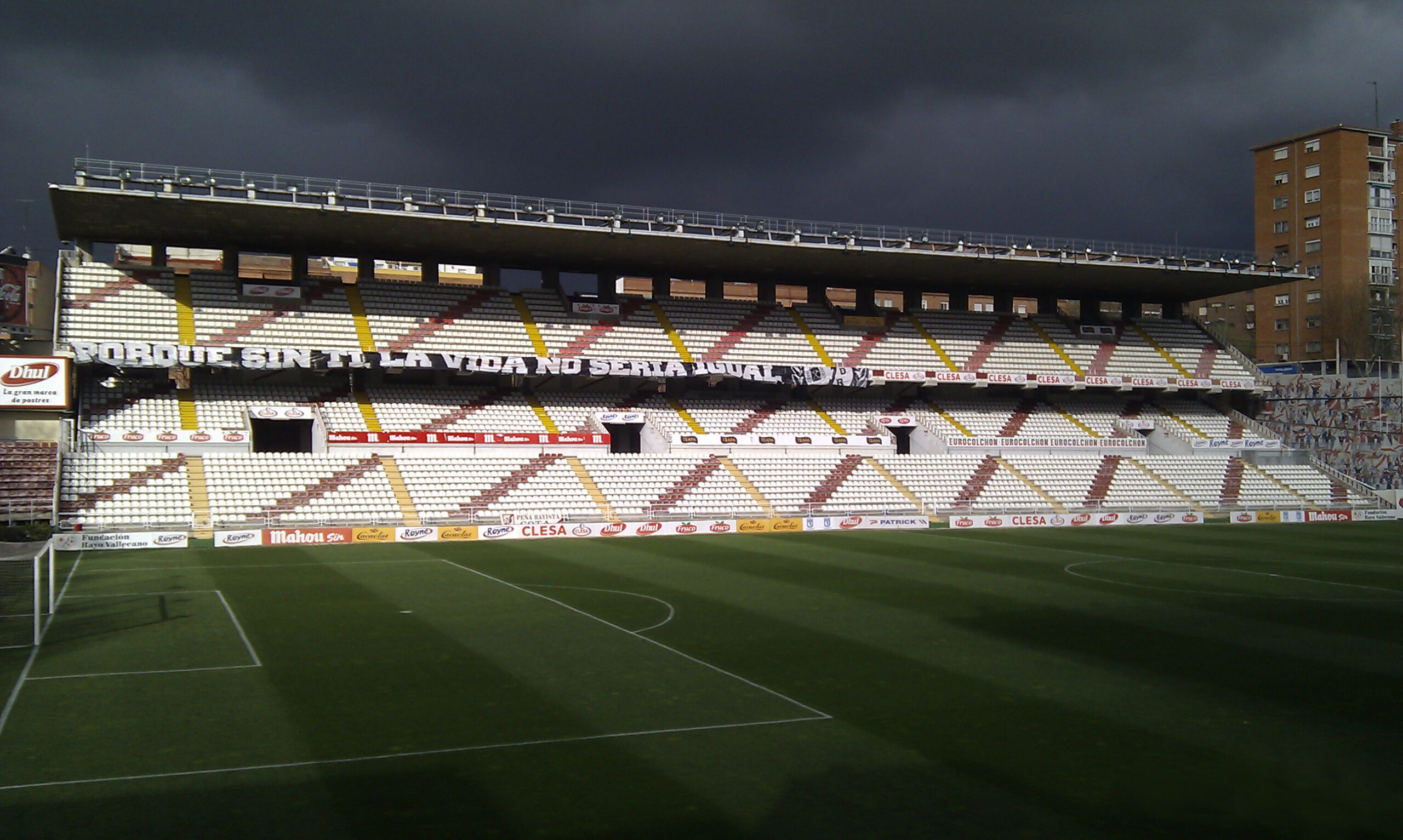
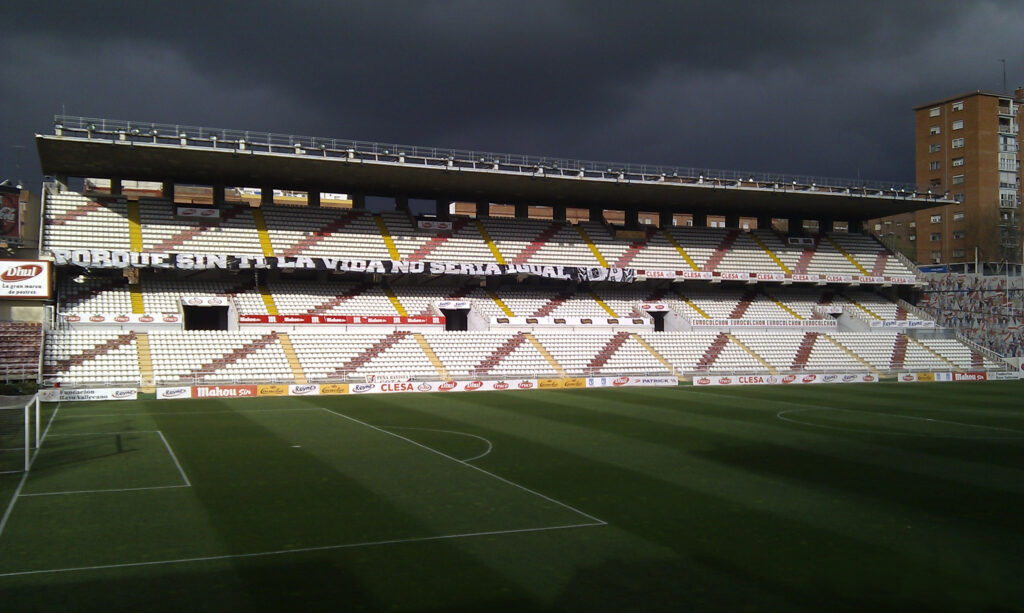
The Estadio de Vallecas, located in the heart of Madrid’s vibrant Vallecas district, is one of the most unique and atmospheric football venues in La Liga. Home to Rayo Vallecano, the stadium is famous for its intimate setting and its unusual three-sided layout, with a large wall behind one of the goals instead of a grandstand. With a capacity of approximately 14,700, « Vallecas » is widely regarded as a bastion of traditional, community-focused football. In 2026, the stadium remains at the center of local headlines following the regional government’s decision to renovate and expand the site to 25,000 seats rather than relocating the club.
Par K3T0 — Travail personnel, CC BY 2.5 es, Lien
14.708
Inaugurated in 1930, the stadium originally served as the home for Racing Club de Madrid before becoming the permanent base for Rayo Vallecano. Throughout its century-long history, the venue has survived the Spanish Civil War and multiple renovations, notably in the 1970s when its current structure took shape. For many years, it bore the name of former president Teresa Rivero, but in 2011, fans voted to return to the traditional name, « Estadio de Vallecas. » Today, it is more than a sports venue; it is a symbol of the neighborhood’s working-class identity and social resistance.
The stadium’s most striking architectural feature is the absence of a stand behind the northern goal, where a large billboard-covered wall stands instead, separated from the pitch by a narrow street and residential buildings. This creates a « u-shaped » bowl that amplifies sound toward the other three stands. The stadium is predominantly a single-tier structure, which ensures that all 14,708 spectators are remarkably close to the pitch. The design is famously compact, with the stands almost touching the touchlines, creating one of the most « English-style » atmospheres in Spanish football.
A matchday at Vallecas is defined by the « Bukaneros, » the club’s ultras who occupy the Fondo stand. They are known for their political activism, social causes, and non-stop chanting accompanied by brass bands. The atmosphere is loud, rebellious, and welcoming, often described as a « party in the neighborhood. » Because of the stadium’s size and the community’s deep connection to the club, every goal is celebrated with an intensity that makes the metal structure of the stands literally shake, providing a visceral experience for any visitor.
The stadium is located in the Puente de Vallecas district of Madrid. It is exceptionally well-connected to the city center via the Madrid Metro; the « Portazgo » station on Line 1 (Blue Line) exits directly at the stadium’s main gates. This makes it one of the easiest stadiums to reach for tourists and locals alike. Additionally, numerous bus lines serve Avenida de la Albufera, the main artery of the neighborhood. Walking from the Atocha train station is also a popular route for those wanting to soak in the local bars and street life before a game.
The stadium takes its name from the Vallecas neighborhood, which was an independent municipality until it was annexed by Madrid in 1950. The name is a point of immense pride for local residents (« Vallecanos »), who often view themselves as distinct from the rest of Madrid. By naming the stadium after the district rather than a commercial sponsor, the club and its fans emphasize that the team belongs to the people and the streets of the neighborhood.
The most efficient way to get to the stadium is by taking Madrid Metro Line 1 to the Portazgo station. The station exits are situated right in front of the stadium’s south and west stands. If you are coming from the city center (Sol or Gran Vía), the journey takes approximately 15 minutes. Taxis and rideshares are also common, but Avenida de la Albufera can become extremely congested on matchdays, making the Metro the superior option.
For the best overall view of the pitch, the « Lateral Cubierta » (covered side stand) offers an elevated perspective and protection from the weather. For those who want to be immersed in the legendary Rayo atmosphere, tickets in the « Fondo » are essential, as this is where the Bukaneros lead the songs. Avoid the very first rows if you prefer a wider tactical view, but if you want to be close enough to hear the players and coaches, any seat in the lower sections will deliver an experience unlike any other in Spain.
Avenida de la Albufera is lined with traditional Spanish « tabernas » and bars that overflow with fans before kickoff. « Cervecería La Mayor » is a popular gathering spot for a pre-match Mahou beer and tapas. For something unique to the neighborhood, look for spots serving « Bocadillos de Calamares » or traditional Madrid-style stews. The neighborhood is also known for its diverse international food scene, reflecting the multicultural nature of modern-day Vallecas.
As of May 2026, Rayo Vallecano is in a period of transition regarding its home. While there was significant talk of moving to a new site, the Community of Madrid has confirmed that the stadium will remain at its current location and undergo a €45–50 million renovation. These works, expected to take about 18 months, will eventually increase the capacity to 25,000. For current visitors, be aware that some areas may be under maintenance. Standard security checks apply, and it is recommended to buy tickets online well in advance, as the stadium’s small capacity leads to frequent sell-outs.