Amadou Gon Coulibaly Stadium
Korhogo, Ivory Coast
Dakar Senegal
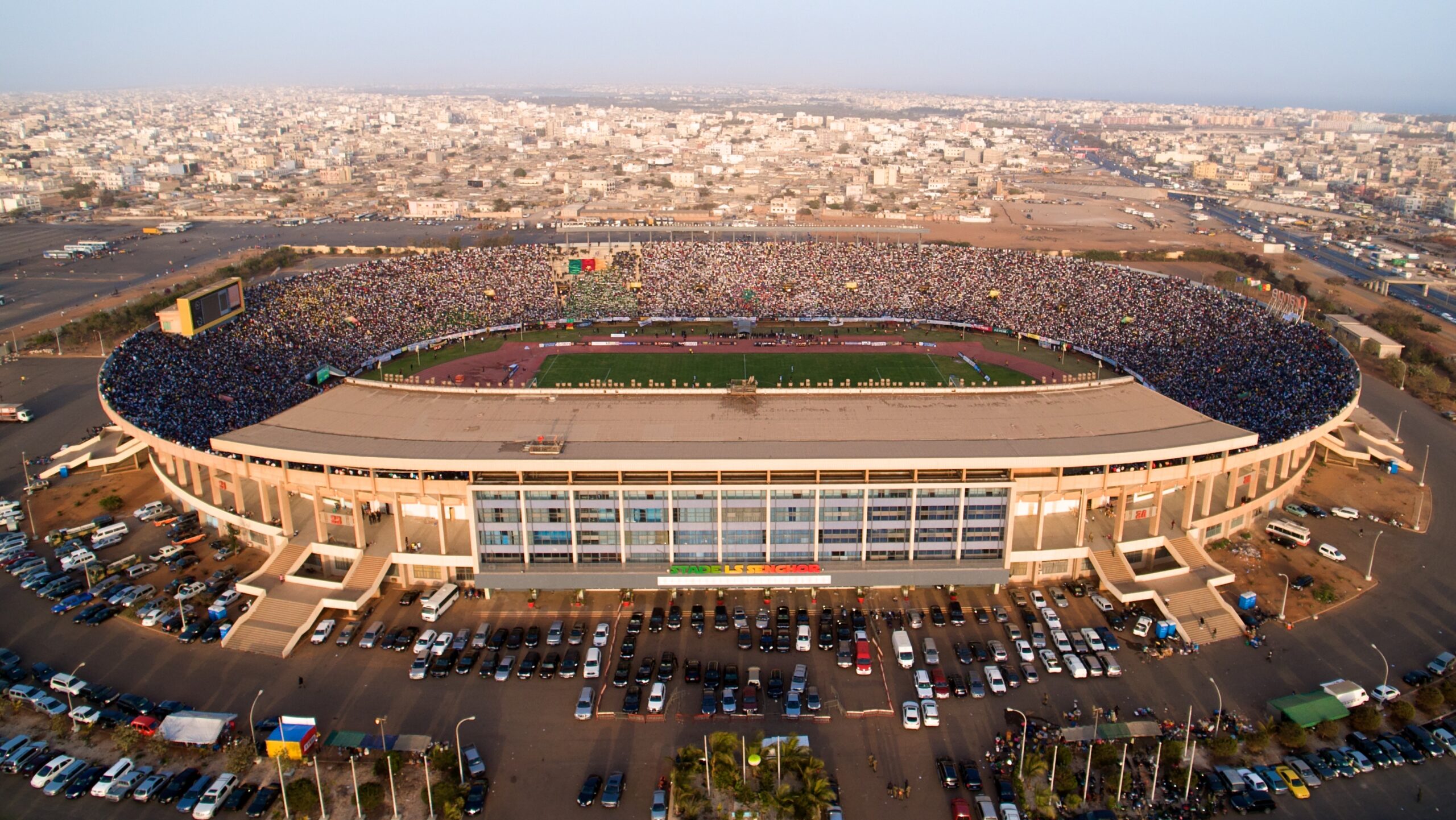
Stade Léopold Sédar Senghor is a major multi-purpose stadium located in Dakar, Senegal, with an official seating capacity of 60000. Serving as the historic home venue for the Senegal national football team, this massive concrete arena is widely recognized for its unique architectural design. It has historically hosted premium Africa Cup of Nations matches and high-profile domestic football league fixtures.
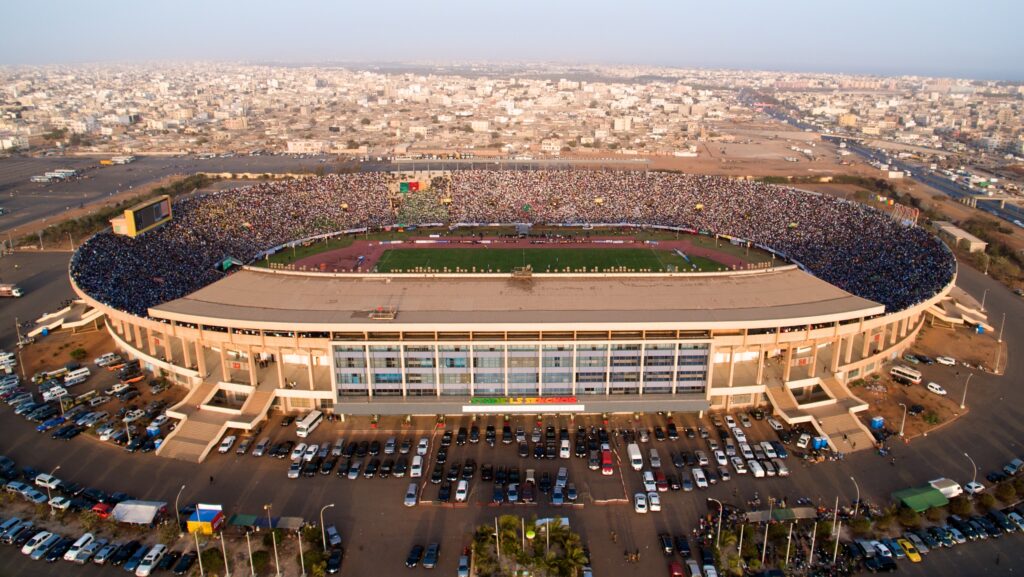
By Jeff Attaway from Dakar, Senegal - Senegal 1 - Cameroon 0 - Stade Léopold Sédar SenghorUploaded by BaldBoris, CC BY 2.0, Link
40.000
The construction of the sports complex began in the early 1980s through a bilateral cooperation agreement between the governments of Senegal and the People’s Republic of China, which funded and executed the project. The grand opening occurred on October 31, 1985, originally under the name Stade de l’Amitié, meaning Friendship Stadium. Structurally integrated into the northern suburbs of the capital, the venue was built to replace older, smaller athletic facilities in the city. In 2001, the institution officially changed its name to honor Léopold Sédar Senghor, the first president of the Republic of Senegal. Over the decades, the facility has undergone intermittent structural maintenance and major modernization planning to address concrete wear and upgrade player amenities to modern international standards.
The architecture of the stadium is defined by its brutalist concrete structure and an iconic open-air design that resembles a giant flying saucer or a continuous curved bowl. The stands are constructed from reinforced concrete panels, forming a steep, continuous double-tier system around the running track and grass pitch. The absence of a roof over the vast majority of the seating sections leaves the arena open to natural elements and sunlight, while providing clear sightlines from all angles. Acoustically, the wide, circular layout allows sound to travel openly across the bowl, with the concrete tiers reflecting the vocal noise of the crowd back toward the pitch, creating an intense atmosphere during high-attendance sporting events.
The official name of the venue honors Léopold Sédar Senghor, who was a world-renowned poet, cultural theorist, and the first president of Senegal from 1960 to 1980. The stadium has never utilized corporate naming rights or commercial sponsorships for its title. Locally and internationally, it is frequently referred to by its former historical name, Stade de l’Amitié, or simply as the Stade Senghor. The name represents a monumental symbol of Senegalese national pride, sporting history, and political legacy within West Africa.
The official maximum capacity of the stadium stands at 60000 spectators, making it one of the largest sporting structures in the region. The seating configuration consists of a large lower tier and an expansive upper tier, separated by a central concourse. The main western stand features a dedicated presidential tribune, specialized VIP lounges, and media press boxes. The vast majority of the stadium operates with concrete terrace seating, which is a traditional configuration for large-scale venues in the area, allowing flexibility in crowd management during major international fixtures.
The venue has hosted numerous historic football matches, most notably serving as the primary host stadium for the 1992 Africa Cup of Nations, including the opening match and the grand final where Ivory Coast defeated Ghana in a dramatic penalty shootout. It has also been the stage for iconic FIFA World Cup qualification campaigns where the Senegal national football team secured memorable victories against top African nations. Beyond football, the arena has hosted major international track and field events, such as the IAAF Grand Prix, as well as historic traditional Senegalese wrestling championships that regularly filled the stands to maximum capacity.
The sports complex is situated in the northern part of Dakar, specifically within the bustling Patte d’Oie neighborhood, close to the intersection of major regional highways. The surrounding district is a dense mix of residential areas, vibrant local markets, and commercial transport hubs. On matchdays, the surrounding avenues, including the Route de l’Aéroport, experience an immense influx of color and pedestrian traffic as thousands of fans dressed in the green, yellow, and red colors of the national team gather early around the outer gates.
The arena is accessible via local public transport networks, with numerous regional bus lines and shared taxis, known as Ndaga Ndiaye or Car Rapide, stopping directly outside the main entrances along the Route de l’Aéroport (to be verified before your visit). Major road links provide direct access from the city center and the Blaise Diagne International Airport via the regional highway network. Dedicated parking areas exist within the outer perimeter of the complex, though access is strictly regulated on matchdays, and specific entry points are provided for officials and spectators requiring assistance (to be verified before your visit).
The covered sections of the official presidential stand and the adjacent VIP tribunes on the western side offer the most comfortable seating and protection from the sun. The lower and upper tiers along the lateral sides provide excellent panoramic views of the entire football pitch and running track. The most passionate local supporter groups occupy the large open terraces behind the goals, while travelling away supporters are typically allocated specific sections within the upper tiers, separated from the main home crowds by security cordons.
Regularly scheduled independent stadium tours and permanent museum exhibitions are not standardly operated at the facility. Access to the pitch, dressing rooms, and presidential lounges is generally restricted to official sporting events, athletic training sessions, and authorized institutional visits. Groundhoppers and tourists wishing to photograph the brutalist exterior architecture can access the outer plaza on non-matchdays, but entry into the inner seating bowl must be coordinated with the stadium management office (to be verified before your visit).
Food options inside the stadium perimeter consist primarily of local vendors selling traditional Senegalese street food, fresh fruits, roasted peanuts, and bottled water or soft drinks. Outside the outer security gates, the lively Patte d’Oie neighborhood features numerous local restaurants, cafes, and informal food stalls serving traditional dishes such as Thiéboudienne and grilled meats to fans looking to socialize before passing through the stadium turnstiles.
For high-profile international matches, security procedures at the main outer gates are comprehensive, involving physical body searches and ticket verifications by local authorities. Visitors are strongly advised to arrive several hours prior to the scheduled kickoff to avoid large bottlenecks at the entry points. Standard stadium safety regulations strictly prohibit the entry of weapons, glass bottles, pyrotechnics, and large bags inside the stands. The venue operates primarily on cash transactions for all local food and beverage purchases.
The stadium does not house a permanent, modern corporate megastore on its grounds. On matchdays, official and licensed national team jerseys, scarves, flags, and merchandise are sold by authorized mobile vendors and temporary merchandise stalls set up around the outer plaza of the sports complex and along the main access roads. Official team merchandise can also be purchased through selected retail sports stores in downtown Dakar and via the official internet channels of the Senegalese Football Federation.
The stadium has an official maximum seating capacity of 60000 spectators. This large capacity makes it the primary historic venue for major international football matches and large-scale athletic events in Senegal.
The stadium is officially named in honor of Léopold Sédar Senghor, who was a distinguished poet, cultural philosopher, and the first president of the Republic of Senegal following its independence.
The most notable international tournament hosted at the arena was the 1992 Africa Cup of Nations, including the final match. It has also hosted premium international track and field events and continental club fixtures.
The stadium can be reached via major local bus routes and regional shared taxis that run along the Route de l’Aéroport in the Patte d’Oie district. Visitors should verify current routes and operating schedules prior to traveling.
Regular guided public tours and dedicated museums are not standardly available at the venue. General entry to the interior stands is typically restricted to matchdays and official athletic events.