

Academy Stadium
Manchester, England
Manchester England
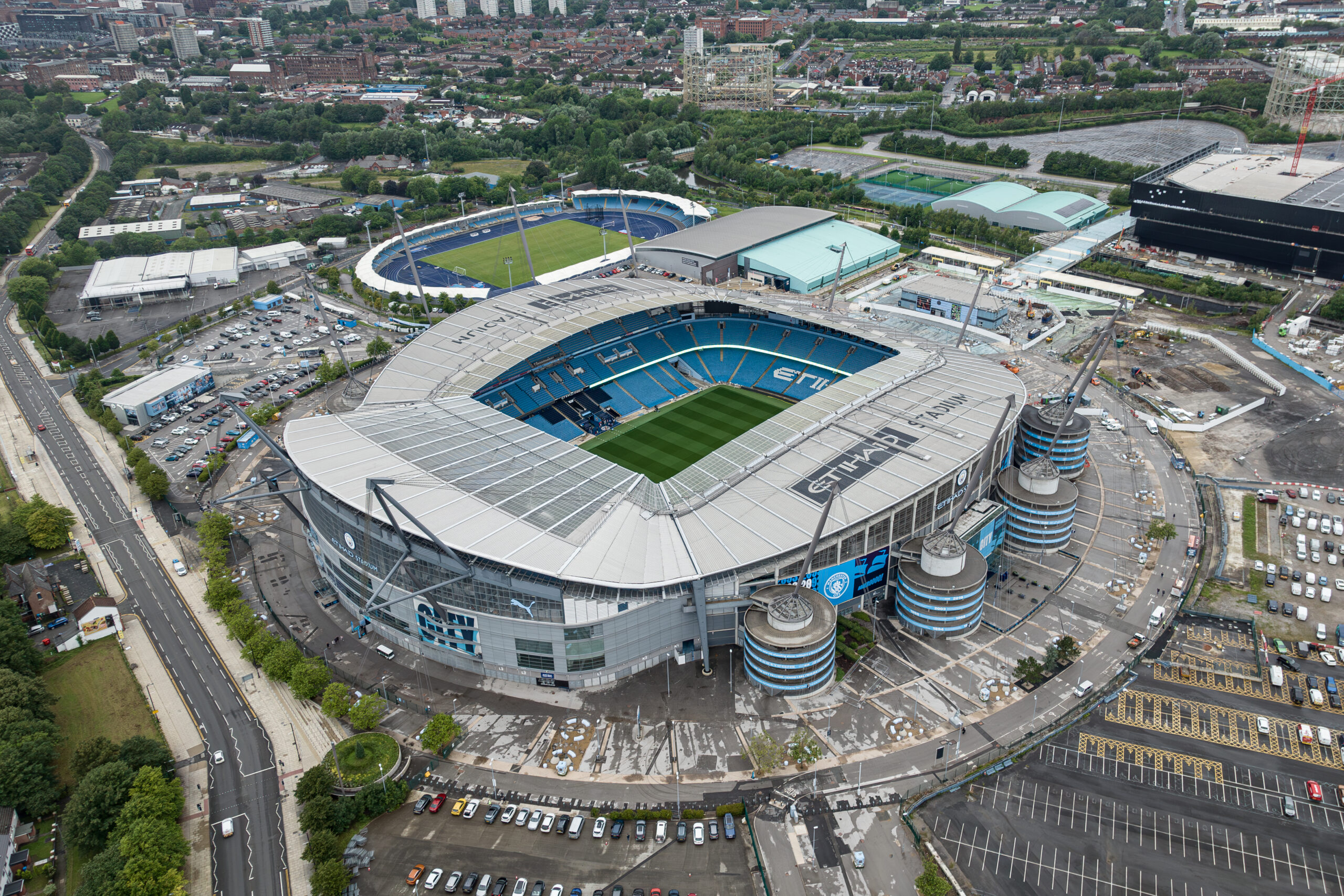
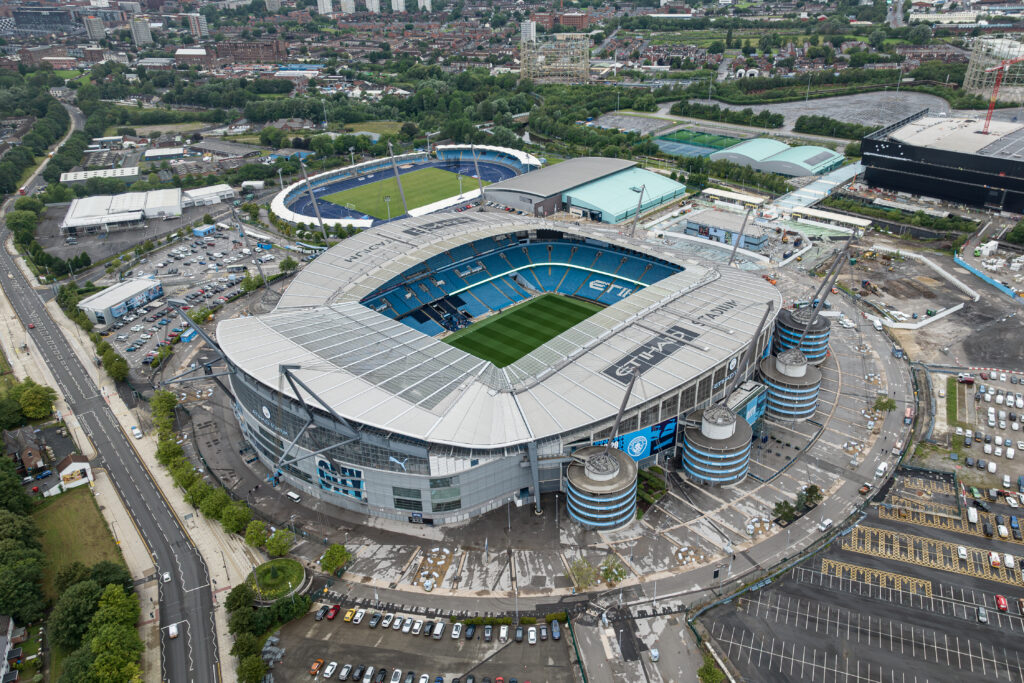
The Etihad Stadium, located in Manchester, serves as the home ground for Manchester City FC. With an official capacity of 53,400 spectators, this modern sports arena is classified as an UEFA Category 4 stadium. Originally constructed for the 2002 Commonwealth Games before being converted into a dedicated football arena, the venue stands out for its distinctive cable-suspended roof structure and its central role in the regeneration of East Manchester.
Arne Müseler, cropped by Blackcat, CC BY-SA 3.0 DE, via Wikimedia Commons
The initial construction of the venue began in January 2000 after Manchester was selected to host the 2002 Commonwealth Games. Designed by the architectural firm Populous, the stadium officially opened its doors on July 25, 2002, to host the athletics events and opening ceremony of the games. Following the conclusion of the event, a major conversion project was initiated to transform the athletics arena into a football-specific stadium. This conversion involved excavating the track level to lower the pitch, installing a new lower tier of seating, and removing the temporary stand at the north end to replace it with a permanent structure. Manchester City FC officially moved into the arena at the start of the 2003-2004 football season, signing a 250-year lease agreement with Manchester City Council. The structural evolution continued a decade later when the club secured planning permission to expand the south stand, adding a third tier that significantly altered the profile of the building.
The architectural design of the venue features a bowl-shaped grandstand configuration enclosed by a continuous, flowing roof structure. The structural engineering is defined by twelve external masts and an intricate network of stay cables that support the entire roof weight, eliminating the need for internal pillars and ensuring unobstructed sightlines from every seat. Groundgranulated blast-furnace slag concrete and tubular steel were heavily utilized during construction to maximize durability. The roof itself incorporates clear polycarbonate sections at the inner edges to maximize the entry of natural sunlight onto the hybrid grass pitch. Acoustic engineering was integrated into the roof curvature, which tilts downward toward the pitch to reflect and contain the vocal noise generated by the crowd within the lower bowl.
The official name of the venue is the City of Manchester Stadium, a title designated by the Manchester City Council to reflect its civic origin. In July 2011, Manchester City FC announced a comprehensive ten-year sponsorship agreement with Etihad Airways, the national airline of the United Arab Emirates, which included the commercial naming rights for the stadium and the surrounding campus. Supporters and local residents frequently refer to the ground simply as Eastlands, a geographic nickname derived from the surrounding regeneration area of East Manchester. The stadium is also universally called the Etihad by football fans and sports journalists globally, cementing its association with the modern era of the football club.
The most significant modernization project occurred between 2014 and 2015, focusing on the expansion of the South Stand. This major engineering project added approximately 6,000 seats by constructing a third tier, increasing the total capacity of the stadium from around 47,500 to the verified figure of 53,400. The capacity configuration is divided across three main tiers in the East and West Stands, and a mix of two and three tiers in the North and South Stands. Premium hospitality options include the Tunnel Club, where guests can view players through one-way glass in the tunnel, alongside multiple luxury corporate boxes and VIP lounges. Rail seating has been successfully installed in the lower tier of the South Stand to provide dedicated safe standing areas for supporters during domestic fixtures.
The stadium has hosted several historic football matches that have defined modern sports history. On May 13, 2012, the venue witnessed one of the most dramatic conclusions to a Premier League season when Manchester City FC defeated Queens Park Rangers 3-2, scoring two goals in stoppage time to secure their first top-flight league title in 44 years. In European competitions, the ground hosted the 2008 UEFA Cup Final, where Zenit Saint Petersburg defeated Rangers FC 2-0. International football has also featured at the arena, including England national team fixtures and matches during the UEFA Women’s Euro 2022 tournament.
The stadium is situated within the Etihad Campus in the Eastlands district of Manchester, approximately 1.5 miles east of Manchester city centre. The walking distance from Manchester Piccadilly, the primary railway station of the city, is roughly 25 minutes along a well-lit and dedicated safe walking route known as Joie’s Walk. The surrounding neighborhood is characterized by a mix of modern sports facilities, including the National Cycling Centre, the Manchester Regional Arena, and the Co-op Live indoor arena. On a typical matchday, the adjacent streets such as Ashton New Road and Alan Turing Way fill with pedestrians, creating a vibrant pre-match environment focused around local venues and official fan plazas.
The most efficient method to reach the venue is via the Manchester Metrolink tram network, utilizing the Ashton-under-Lyne line to arrive directly at the Etihad Campus tram stop, which is located immediately adjacent to the stadium. Several dedicated bus routes serve the area from Manchester city centre, including bus numbers 216, 217, and 231, which operate frequent services on matchdays. Accessible parking spaces are available on-site within the official car parks, though these require advance booking through the club ticket office. Accessible turnstiles and low-level counters are positioned around the stadium exterior to ensure smooth entry for disabled visitors (all transit services and accessibility provisions should be verified before your visit).
For the finest unobstructed views of the pitch alongside premium amenities, seats located in the middle tiers of the Colin Bell Stand or the East Stand are highly recommended. Budget-conscious spectators and groundhoppers generally find excellent value in the upper tiers of the North Stand. The most passionate home atmosphere is concentrated in the South Stand, particularly in the lower tiers where the safe standing sections are located. Visiting away supporters are allocated seating in the South Stand, typically distributed across all three tiers on one side of the stand, depending on the specific allocation requirements of the tournament.
Prior to entering the turnstiles, many supporters gather at traditional public houses located near the ground, such as Mary D’s Beamish Bar on Ashton New Road, which is a renowned hub for home fans. The official City Square fan zone, located outside the stadium, offers various street food outlets, live entertainment, and bars serving refreshments. Inside the concourses, spectators can purchase classic British football food items such as local meat pies and traditional hot drinks. Locally available beverage options typically include Amstel and Heineken lager, alongside craft beers from regional breweries available at select kiosks.
Security protocols at the venue are strict, requiring all spectators to undergo electronic scanning and bag searches at the outer security perimeter. Bags larger than A4 size are explicitly prohibited from entering the stadium, and there are no bag storage facilities on-site. The entire Etihad Campus operates on a completely cashless payment system, meaning all food kiosks, merchandise stores, and ticketing booths accept only debit cards, credit cards, and contactless mobile payments. Turnstiles generally open 90 minutes before kickoff, and visitors are strongly advised to arrive at least one hour before the match begins to clear security checks without missing the start of the game. High-profile fixtures and local derbies against Manchester United may involve enhanced segregation measures outside the stadium.
The primary Manchester City FC Megastore is located directly at the stadium within the West Stand development, offering a vast two-story retail space filled with official kits, training wear, and souvenirs. In addition to the stadium store, the club operates an official retail outlet in Manchester city centre on Market Street. An official online shop is available for global shipping at any time. The stadium megastore maintains standard daily retail hours and remains open for a period after the final whistle on matchdays, though exact hours may vary for mid-week evening fixtures (operating hours should be verified before your visit).
Yes, there is a dedicated, well-lit pedestrian route called Joie’s Walk that links Manchester Piccadilly station directly to the Etihad Campus. The walk takes approximately 25 to 30 minutes and is heavily used by supporters on matchdays.
Yes, all retail outlets, food kiosks, and betting stands inside the stadium and around the Etihad Campus operate exclusively on contactless and card payments. Visitors must bring a valid debit card, credit card, or mobile payment device to make purchases.
Visiting away supporters are accommodated in the South Stand of the stadium. The allocation is usually spread vertically across parts of tiers one, two, and three, depending on the ticket requirements of the specific competition.
Spectators are only permitted to bring small bags into the stadium that do not exceed A4 dimensions. Backpacks, luggage, and larger bags are strictly banned, and there are no left luggage or storage facilities available at the ground.
The fastest public transport option is the Manchester Metrolink tram network. You can board a tram from the city centre heading towards Ashton-under-Lyne and disembark directly at the Etihad Campus stop located right outside the venue.