Ajinomoto Stadium
Chōfu, Japan
Tokyo Japan
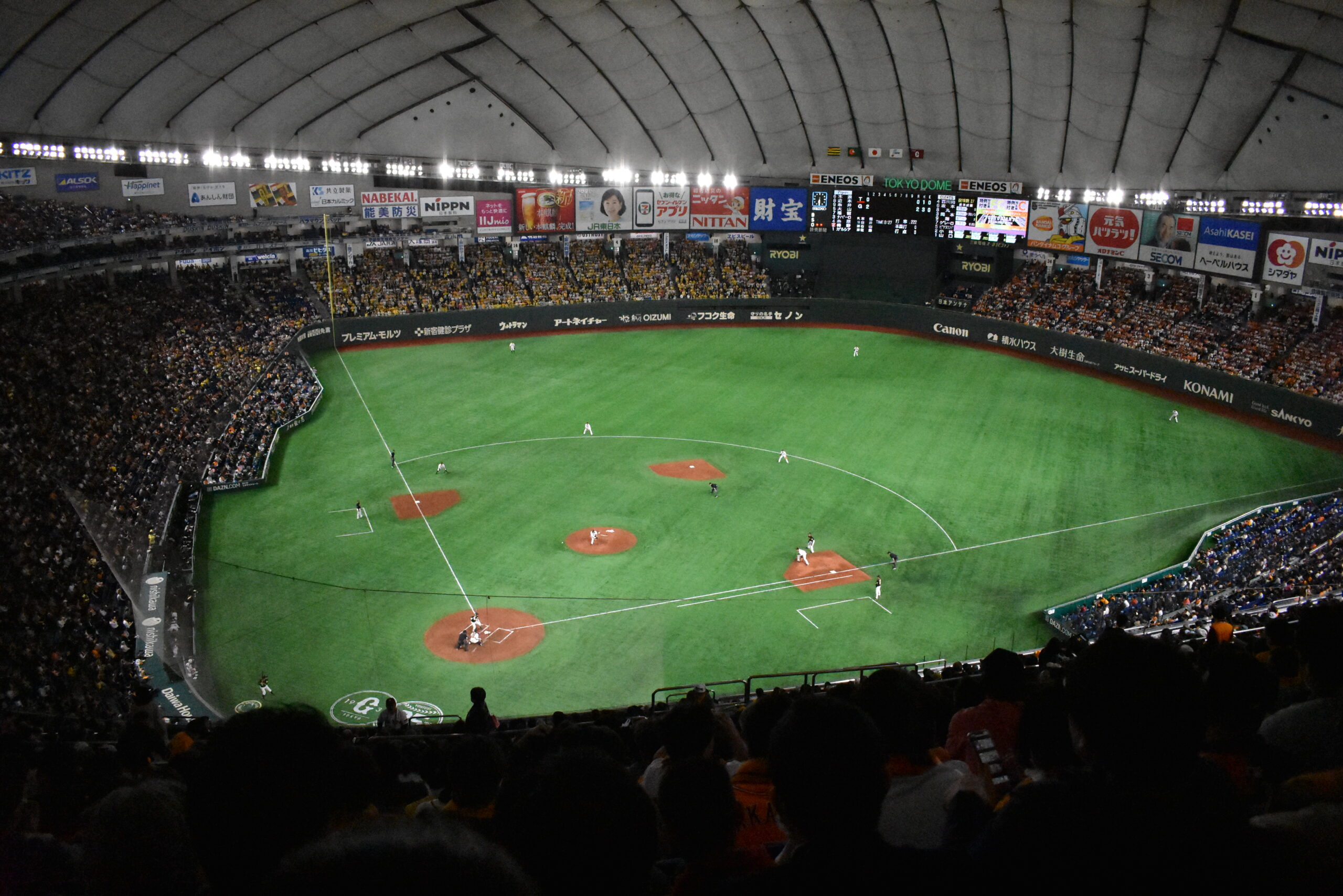
Tokyo Dome is a multi-purpose stadium located in the Bunkyo ward of Tokyo, Japan, featuring an official maximum capacity of 55000 for concerts and 46000 for baseball. Serving as the long-term home stadium for the Yomiuri Giants of Nippon Professional Baseball, this iconic indoor venue is renowned for its air-supported dome structure. It hosts major international sports events, championship baseball games, and massive music concerts, establishing it as a primary entertainment hub in the capital city.
江戸村のとくぞう, CC BY-SA 4.0, via Wikimedia Commons
46.000
The construction of Tokyo Dome began on May 16, 1985, to replace the aging Korakuen Stadium, which stood adjacent to the new site. The development was led by the Takenaka Corporation, utilizing an innovative design concept inspired by the Hubert H. Humphrey Metrodome in Minneapolis. The stadium officially opened its doors on March 17, 1988, marking a significant technological leap for sports infrastructure in Japan. Over the decades, the ownership has remained under Tokyo Dome Corporation, maintaining the facility as a modern venue through consistent institutional upgrades. It has served as the permanent home arena for the Yomiuri Giants since its opening season in 1988, completely shifting the landscape of indoor professional sports and entertainment events in the Tokyo metropolitan area.
The architectural definition of Tokyo Dome centers on its membrane structure, which is supported by a continuous internal air pressure system. The roof consists of a double-layer fiberglass membrane coated with Teflon, supported by high-strength cable networks that span the interior diameter. Air blowers maintain an internal pressure slightly higher than the outside atmosphere to keep the flexible fabric roof inflated. The indoor arena features a symmetrical, egg-shaped stands layout, which has contributed to its widespread local nickname, The Big Egg. Acoustically, the massive enclosed space creates a high reverberation time, making vocal echoes prominent during sporting events and necessitating specialized sound delay systems for musical performances.
The official name Tokyo Dome directly reflects its geographical location and its distinct engineering form as the first major dome stadium in Japan. The venue has avoided corporate naming rights sales, keeping its original name intact since 1988. Culturally, the stadium is widely known across Japan as Tokyo Dome, though the popular descriptive nickname The Big Egg was heavily utilized during its early years due to the white, rounded appearance of the inflated roof. The resident team, the Yomiuri Giants, represents one of the oldest and most successful professional baseball franchises in Japan. The club identity is deeply intertwined with the venue, as the team colors of orange, black, and white dominate the interior seating bowl and surrounding concourses during home games.
Tokyo Dome has undergone several targeted modernization phases rather than structural expansions, keeping its official baseball capacity at 46000 and total event capacity at 55000. A major renovation completed ahead of the 2022 Nippon Professional Baseball season introduced the largest main video scoreboard in Japan, measuring approximately 125 meters in width. The seating configuration is divided into the infield stands, outfield stands, and specialized premium areas. The corporate hospitality features include the Diamond Box seats directly behind home plate, alongside luxury loge suites positioned between the upper and lower decks. Permanent standing-room sections are designated at the rear of the outfield concourses for specific matchdays, while fully integrated wheelchair-accessible seating platforms are available across the main concourse level.
The sporting legacy of Tokyo Dome includes hosting the opening games of the Major League Baseball regular season on multiple occasions, notably the 2000 series between the New York Mets and the Chicago Cubs. In professional boxing, the venue was the site of one of the greatest upsets in sports history on February 11, 1990, when James Buster Douglas knocked out the undefeated Mike Tyson to win the Undisputed Heavyweight Championship. The stadium has also hosted multiple editions of the World Baseball Classic, welcoming international national teams to Tokyo. On the domestic stage, the Yomiuri Giants have clinched numerous Japan Series titles on this field, cementing the arena as a historic battleground for Japanese baseball.
Tokyo Dome is situated in the central Bunkyo ward of Tokyo, positioned approximately 3 kilometers north of Tokyo Station and roughly 5 kilometers northeast of Shinjuku. The stadium forms the centerpiece of Tokyo Dome City, a comprehensive commercial and entertainment complex that includes an amusement park, the Tokyo Dome Hotel, and the LaQua spa facility. The surrounding neighborhood transitions from bustling commercial storefronts to the historic Koishikawa Korakuen Garden immediately adjacent to the west. On game days, the streets and plazas surrounding the perimeter fill with thousands of fans arriving via local transit, creating a dense but orderly pre-match environment characterized by local food stalls and team merchandise stands.
Tokyo Dome is exceptionally well-connected by the Tokyo municipal transit network, with several major stations within walking distance. Suidobashi Station provides direct access via the JR Chuo-Sobu Line and the Toi Mita Subway Line. Alternatively, Korakuen Station serves visitors traveling on the Tokyo Metro Marunouchi Line and Namboku Line, while Kasuga Station provides access via the Toei Oedo Line. For visitors driving to the venue, limited paid public parking spaces are available within the Tokyo Dome City complex, though public transport is highly recommended due to heavy traffic. All nearby stations and stadium entrance gates feature step-free elevator access and dedicated tactile paving to assist passengers with reduced mobility (to be verified before your visit).
For the best view of the overall action and the massive new video board, seats in the lower tier infield sections offer prime sightlines, though they carry the highest ticket prices. Budget-conscious travelers and groundhoppers typically opt for the upper deck outfield or reserved infield seats, which provide a complete panoramic view of the entire playing field. The passionate Yomiuri Giants home supporters occupy the right-field outfield stands, turning that entire section into a sea of orange. Conversely, visiting team supporters are strictly designated to the left-field outfield visitor section, meaning neutral fans looking for a quiet experience should avoid these specific outfield cheering zones.
While traditional guided stadium tours that grant access to the player locker rooms and dugout areas are occasionally offered during specific periods, they are subject to strict seasonal scheduling around the baseball calendar (to be verified before your visit). However, sports historians can visit the Baseball Hall of Fame and Museum, which is permanently located inside Tokyo Dome near Gate 21. The museum features extensive displays on the history of Japanese baseball, legendary players, and historic artifacts from international tournaments. Museum tickets can be purchased directly at the entrance or online, with operating hours typically running from morning until early evening, extending on matchdays (to be verified before your visit).
Inside Tokyo Dome, a wide variety of Japanese and Western food options are available, ranging from traditional bento boxes named after famous Yomiuri Giants players to classic stadium hot dogs. Premium local draft beers, including Asahi, Kirin, and Sapporo, are famously served by the Uriko, the energetic stadium beer vendors who carry kegs on their backs throughout the stands. Directly outside the stadium gates within Tokyo Dome City, visitors can find numerous casual dining options, including Japanese izakayas, ramen shops, and international fast-food chains. The surrounding Bunkyo district also features historic local bars where fans gather both before and after baseball games.
Tokyo Dome operates as a completely cashless venue, meaning all concession stands, merchandise shops, and ticket booths accept only credit cards, electronic money, or mobile payment apps. Security screening at all entrance gates is thorough, and the possession of hazardous materials, large bags, and glass bottles or aluminum cans is strictly prohibited. Visitors carrying outside beverages are required to pour them into disposable paper cups provided at the security checkpoints. Gates typically open two hours prior to the scheduled first pitch or event start time, and arriving early is recommended to navigate the security lines and locate your specific gate entry point.
The primary merchandise store is the Giants Official Team Store, located on the outer concourse of Tokyo Dome near Gate 23. This flagship retail outlet stocks an extensive range of Yomiuri Giants jerseys, caps, towels, and limited-edition fan memorabilia. Additional merchandise booths and smaller novelty stands operate inside the stadium concourses on matchdays, opening and closing in accordance with the game schedule. The Yomiuri Giants also maintain an official online shop for global orders, while general sports stores in the Shinjuku and Tokyo Station districts offer smaller selections of team gear (to be verified before your visit).
Tokyo Dome features a verified maximum capacity of 55000 spectators for music concerts and large entertainment events. For professional baseball games, the official seating capacity is configured to accommodate 46000 fans.
The stadium serves as the permanent home venue for the Yomiuri Giants, a historic franchise in Nippon Professional Baseball. Additionally, the venue hosts select interleague games, corporate tournaments, and international baseball events throughout the year.
No, Tokyo Dome operates entirely as a cashless facility for all food, beverage, and merchandise purchases. Visitors must use major credit cards, IC transit cards like Suica or Pasmo, or approved QR code mobile payment methods.
The stadium is easily accessed via Suidobashi Station on the JR Chuo-Sobu Line and Toei Mita Line. Alternatively, you can use Korakuen Station on the Tokyo Metro Marunouchi and Namboku Lines, or Kasuga Station on the Toei Oedo Line.
Yes, the Baseball Hall of Fame and Museum is located permanently within the Tokyo Dome structure near Gate 21. It houses a large collection of Japanese baseball memorabilia, historical archives, and plaques honoring inducted players.