Schauinsland Reisen Arena
Duisbourg, Germany
Düsseldorf Germany
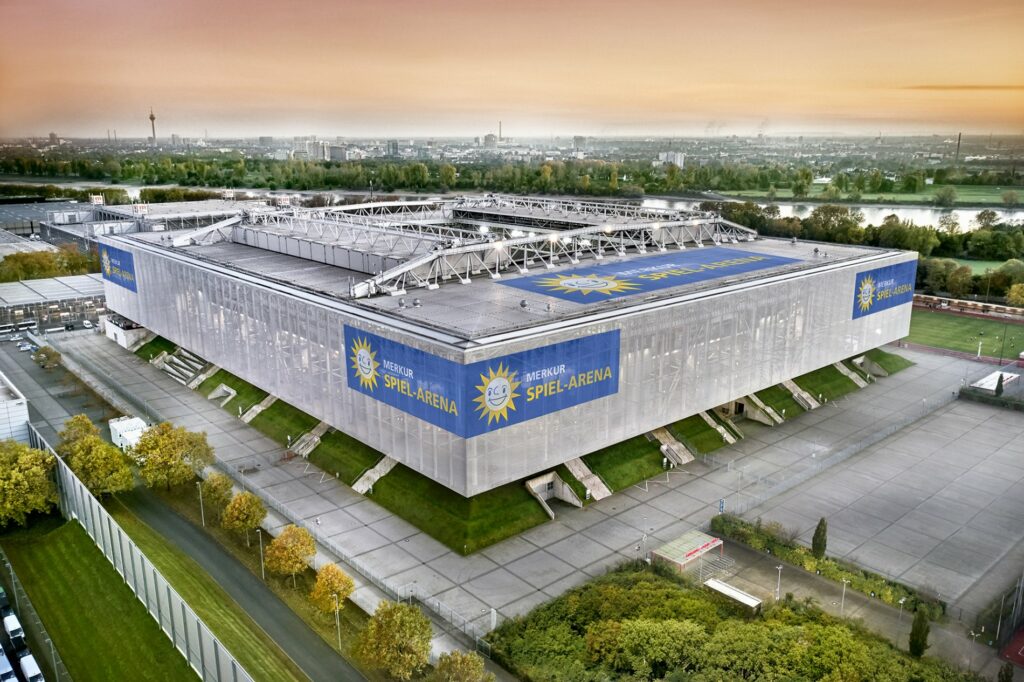
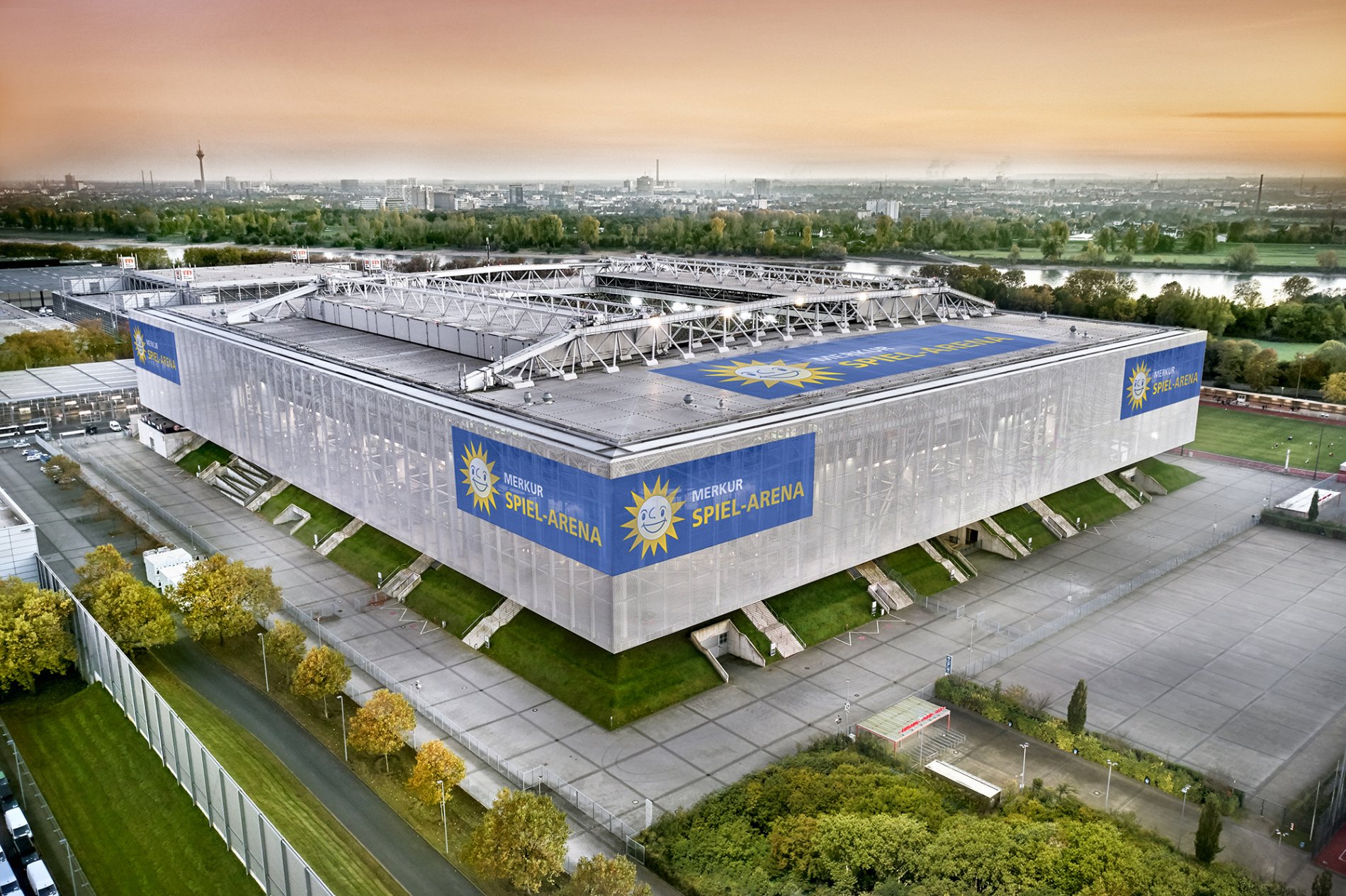
The Merkur Spiel-Arena is a multi-purpose football stadium located in Dusseldorf, Germany, boasting an official capacity of 54,600 spectators for football matches. It serves as the proud home ground of the German football club Fortuna Dusseldorf, which competes in the 2. Bundesliga, and the arena previously hosted matches during the UEFA Euro 2024 tournament. Classified as a UEFA Category 4 stadium, this state-of-the-art venue is highly distinguished by its fully retractable roof and a specialized heating system that allows the entire interior to maintain a comfortable temperature during cold winter months, making it a highly versatile arena for international sports and entertainment events.
54.000
The construction of the venue began in 2002 on the exact site of the former Rheinstadion, a historic multi-purpose arena that was demolished to make way for a modern facility. The development was funded through a public-private partnership involving the city of Dusseldorf and structural engineering consultants. The official structural completion and opening took place in January 2005, providing a completely enclosed, modern home for Fortuna Dusseldorf. Over the years, the institutional evolution of the arena saw major structural upgrades to its security systems and media facilities to comply with stringent UEFA criteria for hosting top-tier international football tournaments.
The architectural design of the Merkur Spiel-Arena stands out due to its distinct box-like exterior appearance rather than a traditional oval stadium shape. Designed by the architectural firm JSK, the stadium features a facade wrapped in translucent aluminum panels that can be illuminated in different colors at night. The seating bowl is fully enclosed and consists of two main tiers separated by a hospitality level. The structural highlight is its massive steel retractable roof, which can close completely in approximately thirty minutes, combined with an advanced acoustic setup designed to trap noise inside, amplifying the roar of the crowd and creating an intense environment for football matches and concerts alike.
Originally opened as the LTU Arena due to a sponsorship agreement with the German leisure airline LTU, the stadium underwent naming rights changes, becoming the Esprit Arena in 2009 and later the Merkur Spiel-Arena in 2018 through a partnership with the Gauselmann Group. Local residents and traditional fans of Fortuna Dusseldorf often refer to the venue simply as the Arena Dusseldorf or the Rheinstadion area due to its geographical location next to the Rhine river. The identity of the club is heavily integrated into the stadium design, with red and white seats reflecting the traditional colors of Fortuna Dusseldorf, maintaining a sense of heritage despite the modern commercial naming.
While the core structure has remained intact since 2005, the stadium layout underwent specific reconfigurations to maximize spectator comfort and safety. The official capacity stands at 54,600 for domestic club football matches, which includes a dedicated safe-standing terrace section for home supporters in the South Stand. For international fixtures, such as national team matches, the standing areas are converted into seats, reducing the official international capacity to 47,000. The stadium features exactly 1,240 VIP seats, 43 luxury corporate boxes, and dedicated, easily accessible seating areas for spectators with limited mobility scattered across the lower tier.
Beyond regular league fixtures for Fortuna Dusseldorf, the arena has established a significant legacy by hosting high-profile international sporting events. It served as a host venue for the UEFA Euro 2024 tournament, staging multiple matches including a memorable quarter-final clash. The stadium also hosted the heavyweight boxing world championship bout between Wladimir Klitschko and Tyson Fury in November 2015, where Fury secured a historic victory. In January 2024, the venue broke world records for handball attendance when it was transformed into an indoor court for the opening matchday of the European Men Hand-ball Championship, attracting over fifty-three thousand spectators.
The Merkur Spiel-Arena is situated in the northern district of Stockum in the city of Dusseldorf, approximately five kilometers away from the historic city center and the main railway station, Dusseldorf Hauptbahnhof. The stadium sits directly adjacent to the major Messe Dusseldorf exhibition grounds and the River Rhine, meaning the surrounding area is primarily commercial and exhibition-focused rather than residential. On matchdays, the wide avenues and open plazas surrounding the venue fill with thousands of fans arriving from the city, creating a vibrant, busy atmosphere around the local food kiosks and transport hubs hours before kick-off.
The stadium is exceptionally well-connected by public transportation, with the dedicated subway and light rail station Arena-Sportpark serving as the primary arrival point. Passengers can take the U78 Stadtbahn line directly from the Dusseldorf city center and the main railway station straight to the venue. For those traveling by bus, local line 730 stops within walking distance of the sports complex (transit schedules to be verified before your visit). Drivers can access the stadium via the A44 motorway, which links directly to large official parking lots designated as P1 and P2, featuring specific accessible parking bays for fans with disabilities holding valid permits.
For the finest matchday view and a premium football experience, seats in the East Stand or West Stand offer excellent sideline perspectives of the entire pitch from both the lower and upper tiers. Budget-conscious spectators and neutral groundhoppers typically opt for the upper tiers of the North Stand. The vocal home core occupies the standing blocks of the South Stand, an area best avoided if you prefer a quiet, seated viewing experience. Traveling away fans are accommodated in the northeast corner of the stadium, specifically in blocks 19 to 22 and blocks 133 to 141, providing a secure and clear view of the action.
Official guided tours of the Merkur Spiel-Arena are organized regularly, allowing football fans and groundhoppers to explore the player dressing rooms, the walk-out tunnel, the press conference room, and the VIP hospitality suites. These public tours are usually scheduled on specific non-matchdays throughout the week, and private group bookings can be arranged in advance via the official stadium website. Ticket pricing and exact time slots vary depending on the season, so visitors must check the latest availability online (tariffs and schedules to be verified before your visit). A small historical exhibition displaying trophies and memorabilia of Fortuna Dusseldorf can be viewed during specific tour formats.
Inside the stadium concourses, spectators can purchase a variety of classic German matchday snacks, including bratwurst, currywurst, and pretzels. The official beer partner of the stadium serves local altbier, a traditional top-fermented dark beer native to the Dusseldorf region, alongside standard pilsner options. Outside the stadium, fans gather around temporary beverage stands near the tram station and the exhibition halls before entering the gates. For sit-down meals or traditional pub experiences, visiting groundhoppers usually explore the famous Altstadt district in central Dusseldorf before catching the light rail line out to the stadium.
Security screening at the Merkur Spiel-Arena is thorough, with separate turnstile lanes for bag checks, meaning visitors should arrive at least ninety minutes before kick-off to avoid queues. Large bags and backpacks exceeding the A4 size format are strictly prohibited inside the stadium and must be left at mobile storage points outside. The entire food and beverage system inside the stadium operates on a cashless basis, requiring visitors to pay using major debit cards, credit cards, or contactless mobile payment methods. For high-risk matches and local derbies, strict segregation is enforced outside the ground, restricting away fans from entering home concourses.
The primary matchday megastore is located directly at the Merkur Spiel-Arena complex, positioned close to the main administrative offices of Fortuna Dusseldorf, offering a massive selection of official jerseys, scarves, and club memorabilia. This stadium store opens several hours before kick-off on matchdays and remains accessible shortly after the final whistle (hours to be verified before your visit). For fans exploring the city center, the club also operates a secondary official fanshop in downtown Dusseldorf, and an extensive online retail shop is accessible globally for international supporters looking to purchase merchandise in advance.
The stadium has an official capacity of 54,600 spectators for domestic football matches, which includes standing terraces. For international fixtures, the standing sections are converted to seating, reducing the maximum capacity to 47,000.
You can take the U78 Stadtbahn light rail line directly from Dusseldorf Hauptbahnhof to the dedicated Arena-Sportpark station. The journey is direct and takes approximately fifteen minutes, dropping fans right outside the stadium gates.
No, the stadium operates a fully cashless payment system at all food kiosks, beverage bars, and merchandise stands. Visitors must use major credit cards, debit cards, or smartphone payment applications to complete transactions.
The stadium is the permanent home ground of Fortuna Dusseldorf, who play their home league matches here. The venue also occasionally hosts international football matches, concerts, and major indoor sporting events.
The retractable roof is opened or closed depending on weather conditions and event requirements. In the winter or during heavy rain, it is closed completely and combined with the internal heating system to keep spectators warm.