Estadio Presidente Perón
Avellaneda, Argentina
Buenos Aires Argentina
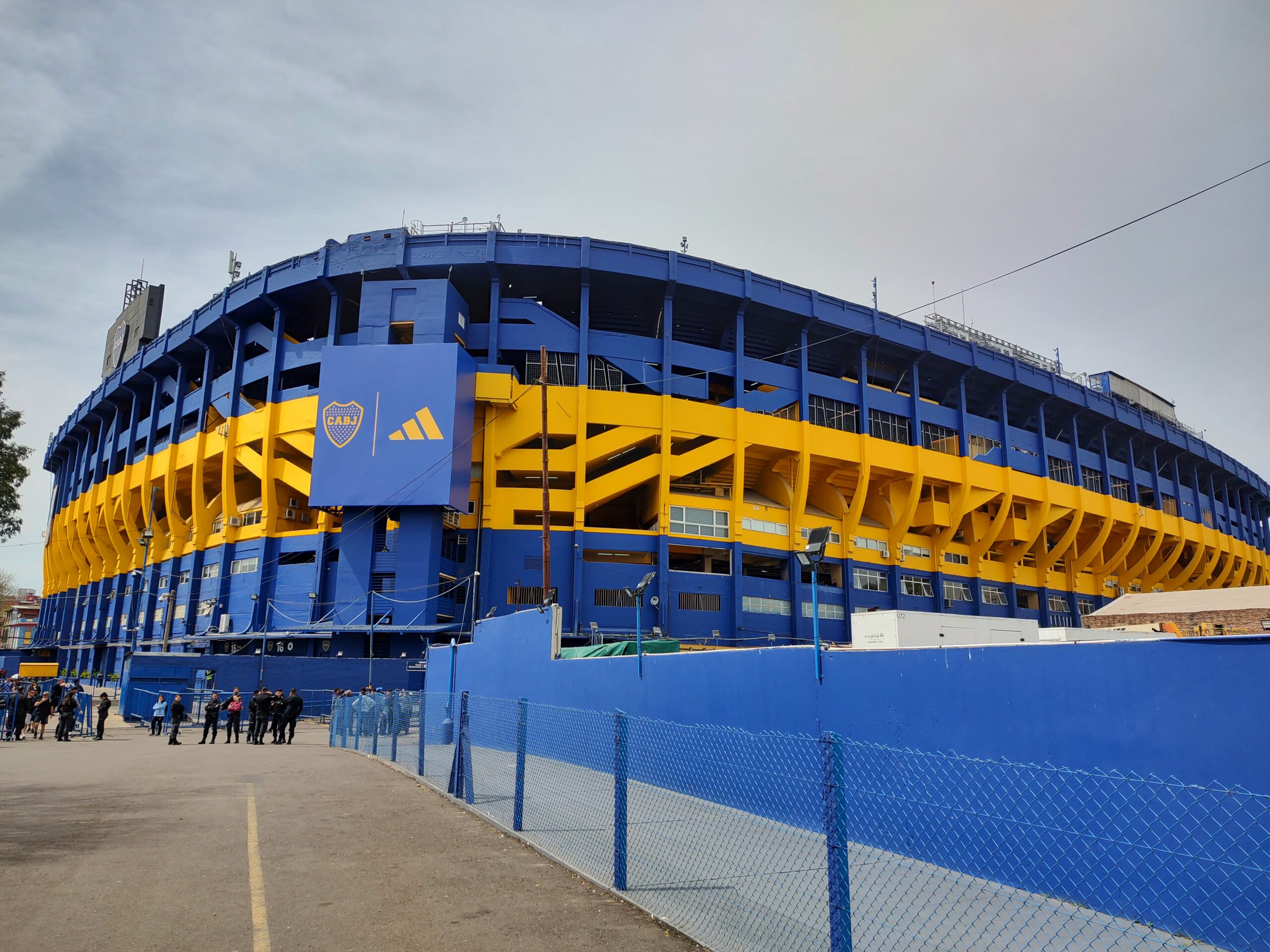
The Estadio Alberto J. Armando, universally known as La Bombonera, is an iconic football stadium located in the La Boca neighborhood of Buenos Aires, Argentina. With a current capacity of 58,305 spectators, it serves as the home ground for Club Atlético Boca Juniors. The stadium is world-famous for its unusual D-shaped design, featuring three steep stands and one flat vertical side, which creates a « vibrating » acoustic effect that makes it one of the most intense and intimidating sporting venues on the planet.
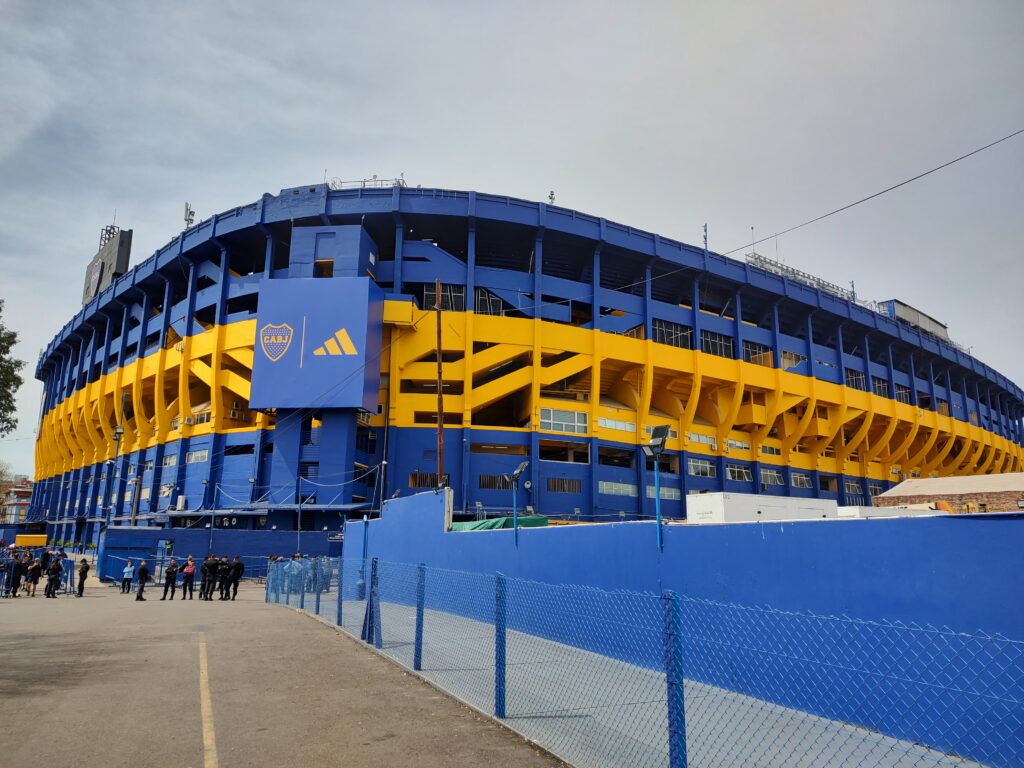
Matibro, CC BY-SA 4.0, via Wikimedia Commons
Inaugurated on May 25, 1940, the stadium was the vision of architects José Luis Delpini, Viktor Sulčič, and Raúl Bes. Originally named Estadio Camilo Cichero, it was renamed in 2000 to honor Alberto J. Armando, the club’s longtime president. Throughout its history, the ground has undergone various modifications, including the addition of a third tier in 1953 and the modernization of the VIP boxes in 1996. In 2025 and 2026, the club began significant infrastructure overhauls, including a full renovation of the main entrance at Gate 3 and the installation of a 33-meter LED screen to modernize the stadium facade while preserving its historical essence.
The stadium is a masterpiece of space-saving engineering, forced by the limited land available in the La Boca district. Its nickname, La Bombonera (The Chocolate Box), comes from Viktor Sulčič’s observation that the structure resembled a box of chocolates he had received. The steep inclination of the stands ensures that fans are practically on top of the pitch. The structure is famous for its physical vibration when supporters jump in unison, a phenomenon caused by the stadium’s unique concrete cantilever design. Recent 2026 upgrades have expanded the Platea L concourse from 1.5 meters to 15 meters in width to improve fan circulation.
The identity of Boca Juniors is deeply tied to the working-class roots of the La Boca neighborhood. The stadium is the headquarters of La Doce (The 12th Player), one of the most organized and vocal supporter groups in the world. Matchdays are a sensory explosion of blue and gold banners, confetti (papelitos), and constant chanting. The culture is built on the « Bombonera doesn’t tremble, it beats » (La Bombonera no tiembla, late) philosophy, where the collective movement of the fans is said to influence the outcome of the game through sheer psychological pressure.
The official name, Estadio Alberto J. Armando, honors the man who led Boca Juniors for over two decades during their golden eras in the 1960s and 1970s. Before this, it was named after Camilo Cichero, the president who initiated the stadium’s construction in the 1930s. Despite the official titles, the name La Bombonera remains the most recognized globally, functioning as a powerful brand for both the club and the city of Buenos Aires.
La Bombonera has hosted numerous Copa Libertadores finals and was the stage for Pelé’s Santos to win the title in 1963. A unique record is that the stadium has never hosted a World Cup match despite its fame, largely due to its unconventional dimensions. A local legend claims that the stadium’s steepness is so extreme that it can cause vertigo for opposing players. In 2026, the stadium integrated a Hard Rock Café with an independent entrance on Dr. del Valle Iberlucea, blending modern commercial tourism with traditional football heritage.
La Bombonera is located at Brandsen 805 in the La Boca district of Buenos Aires. The most reliable way to reach the stadium from the city centre is by taking the « Colectivo » (local bus) lines 29, 53, or 152, which drop passengers within a few blocks of the ground. While there is no subway (Subte) station directly at the stadium, the nearest stops are in the San Telmo area, requiring a 20-minute walk or a short taxi ride. For international visitors, using a radio-taxi or an app-based ride service is recommended for safety, especially for night matches. The stadium is approximately 4 kilometers from the Plaza de Mayo.
For the ultimate atmosphere, the « Popular » terraces behind the goals (North and South) are the place to be, though they are standing-only and often reserved for club members. The Platea L and Platea Media in the main stands offer the best lateral views and are the most comfortable for international tourists. The third tier of the North Stand, known as Platea K, was fully converted back to standing room in 2026 to increase the capacity for vocal supporters. If you prefer a premium view with more security, the VIP boxes on the flat side of the stadium provide an elevated perspective of the tactical play and the legendary « vibrating » stands opposite.
The area around the stadium is famous for its « Parrillas » and street food vendors. The most traditional matchday snack is the Choripán (chorizo sausage in bread), sold at dozens of stalls along Brandsen and Del Valle Iberlucea streets. For a sit-down meal, El Obrero is a historic « bodegón » nearby that has served football legends and celebrities for decades. In 2026, a new food court was opened in the Platea L sector with 11 different outlets to reduce congestion. For a local drink, fans often gather at bars on the nearby Caminito to share a Quilmes beer before walking the final few blocks to the gates.
Security in La Boca can be complex; it is advised to stay on the main well-lit streets and avoid wandering into residential side alleys after dark. The stadium uses a strict magnetic card system for entry, and ID (DNI or Passport) is often required at the police perimeters. Most transactions inside the stadium are now digital, as the club has moved toward a cashless system for the 2026 season. It is best to arrive at least two hours before kickoff, as the security checks and narrow streets can lead to significant delays in entering the stands.
The official Boca Juniors Megastore is located directly under the stands on the ground floor of the stadium complex. It offers the latest Adidas kits and exclusive club merchandise. Additionally, there are several official retail points in the city centre, including a major store on Calle Florida and another in the Abasto Shopping mall, which are often less crowded than the stadium shop on matchdays.