Adidas Arena
Paris, France
Saint-Denis France
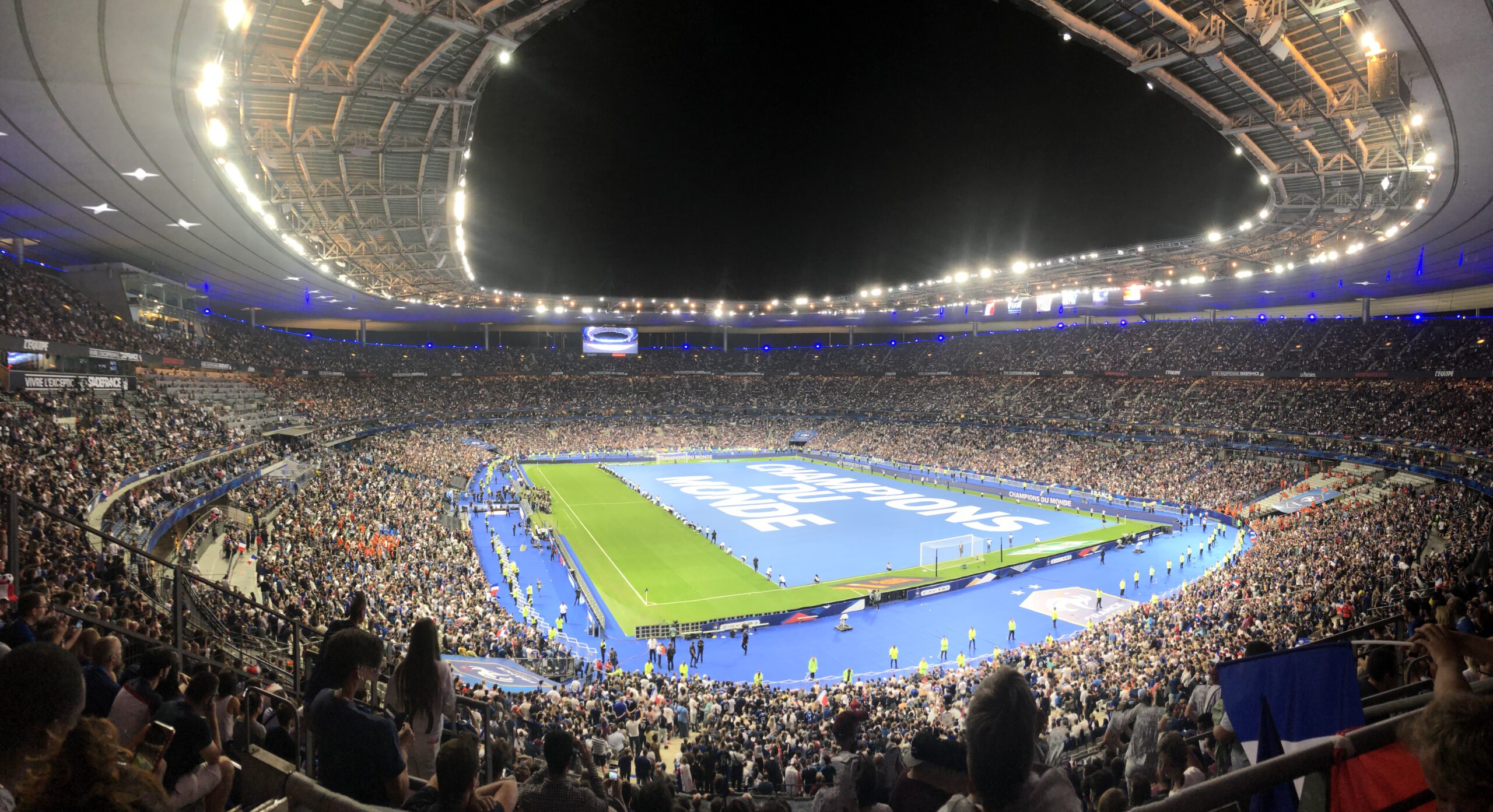
The Stade de France stands as the premier sports venue located in Saint-Denis, boasting an official capacity designed to accommodate over eighty thousand spectators. As the primary home venue for the France national football team and the France national rugby union team, this specialized facility marks a significant milestone for European sport by hosting competitive FIFA World Cup, UEFA Euro, and Six Nations matches. The stadium is uniquely characterized by its modern, purpose-built design that integrates professional-grade playing turf with a spectacular elliptical roof, making it a standout addition to the athletic landscape of the Paris metropolitan area.
Darthvadrouw, CC BY-SA 4.0, via Wikimedia Commons
80.000
The development of the Stade de France represents a modern chapter in the athletic history of Saint-Denis and the capital region. Commissioned to provide a permanent, high-quality home for the 1998 FIFA World Cup, the venue entered the construction phase in 1995 to meet the stringent standards of international sports federations. Since its official inauguration in January 1998 with a match between France and Spain, the stadium has served as the central hub for major French sporting triumphs, anchoring the national sports identity. The construction utilized contemporary engineering practices to ensure long-term durability and optimal sightlines for every spectator in attendance during historic tournaments.
The architectural layout of the Stade de France prioritizes spectator comfort and visual impact. The stadium features an open-air design with a dramatic, floating elliptical roof made of tinted glass and steel that protects spectators while allowing natural light onto the pitch. High-grade natural grass reinforced with hybrid technology provides an elite playing surface, while massive concrete pillars form the backbone of the stands. The perimeter is designed to blend seamlessly with the urban landscape of Saint-Denis, utilizing wide concourses and distinctive external staircases that facilitate efficient crowd movement before and after major events.
As an iconic addition to the sports infrastructure of France, the Stade de France has focused its structural updates on technological integration and major tournament readiness. Recent improvements have centered on upgrading the stadium broadcast lighting systems to meet modern digital television standards and installing massive new giant screens. Additionally, the venue underwent extensive track and seating modifications to serve as the centerpiece for the global athletic events during the Paris 2024 Olympic and Paralympic Games, optimizing electronic ticketing turnstiles and digital hospitality spaces across the main concourse.
Situated strategically within the northern suburb of Saint-Denis, the Stade de France benefits from an accessible location that bridges local neighborhoods with international sports culture. The surrounding district transitions into a lively sports hub on matchdays, attracting a diverse crowd of local residents, international travelers, and organized supporters groups. The matchday experience is defined by local food vendors, pre-game fan activations near the entrance gates, and a highly vocal atmosphere generated by the national fanbase supporting Les Bleus in their international rugby and football campaigns.
The designation Stade de France stems from a selection process initiated before its opening, where the name was proposed by soccer legend Michel Platini and officially adopted to reflect its role as the national stadium. This title reflects a shared commitment to national unity, sporting excellence, and the promotion of elite competition on French soil. The name ensures that the facility maintains an immediate association with national pride, rejecting corporate naming rights to protect its institutional status.
The official seating capacity of the Stade de France is tailored to host eighty thousand six hundred spectators for football and rugby matches, featuring a mixture of standard stadium seating, premium hospitality boxes, and an innovative mobile lower stand system. The main grandstands contain individual numbered seats, while the lower tiers can retract by fifteen meters to uncover an athletics track for track and field events. The venue layout can be adjusted significantly to accommodate massive music concerts and cultural spectacles, expanding the capacity to over ninety-seven thousand people.
The Stade de France continues to build its historical record log, with attendance benchmarks tied closely to the 1998 FIFA World Cup Final where France defeated Brazil, and the 2007 Rugby World Cup Final. The stadium has also served as a critical venue for historic music performances, hosting giant concerts by artists such as U2, Coldplay, and Beyoncé. It remains the only stadium in the world to have hosted a FIFA World Cup Final, a Rugby World Cup Final, a UEFA Champions League Final, and the Olympic track and field events.
Reaching the Stade de France is straightforward via multiple transportation methods within the Paris transport network. Visitors arriving by public transit can utilize specific train lines, including the RER B at La Plaine Stade de France station and the RER D at Stade de France Saint-Denis station, dropping passengers within short walking distance of the gates. Paris Metro Line 13 via Saint-Denis Porte de Paris station and Metro Line 14 also provide direct links. For those traveling by car, major highways A1 and A86 connect directly to designated secure underground parking lots, where spaces must be reserved in advance. The stadium sits approximately three kilometers from the northern edge of Paris, minimizing travel time from the city center.
Selecting the ideal vantage point inside the Stade de France depends on the desired matchday experience. Premium spectators favoring a comprehensive tactical view of the pitch should secure tickets in the central sections of the intermediate side stands, which offer elevated seating, comfortable armrests, and protection from elements under the massive roof canopy. Budget-conscious fans will find excellent value in the upper tiers behind the goals. The most intense vocal atmosphere is found in the lower north and south stands, where the official supporters groups gather to generate chants throughout the match. Visiting team supporters are typically allocated a specific block in the corner of the stadium to maintain crowd safety and organization.
The immediate perimeter of the Stade de France offers various food and beverage options tailored for fans arriving before kick-off. Inside the concourse and along the Avenue du Stade de France, spectators can purchase classic matchday snacks alongside French street food items like galettes and crêpes. Local beverage preferences are well represented, with popular beers like Heineken frequently available at concession stands and neighboring brasseries. Dedicated fan zones near the main concourse also feature rotating food stalls providing specialized menus for matchday attendees.
Attending an event at the Stade de France requires adherence to modern stadium safety protocols. The facility operates on a cashless basis, meaning all concession stands, official merchandise stores, and food trucks accept only credit cards, debit cards, or contactless mobile payments. Security personnel conduct strict double-perimeter screenings, body searches, and bag inspections at all operational turnstiles, and an official A4-size bag restriction policy is enforced. To avoid long queues outside the perimeter, arriving at least two hours before the scheduled kick-off is highly recommended.
The primary merchandise outlet for French national team gear is located directly on the main concourse of the Stade de France, operating heavily on matchdays to provide fans with official jerseys, scarves, caps, and tournament memorabilia. This facility opens its doors alongside the main gates and remains accessible throughout the sporting event. Additional official national team merchandise can be sourced through the primary club boutiques and flagship sports stores located in central Paris during the season.