Maverik Center
West Valley City, United States
Salt Lake City United States
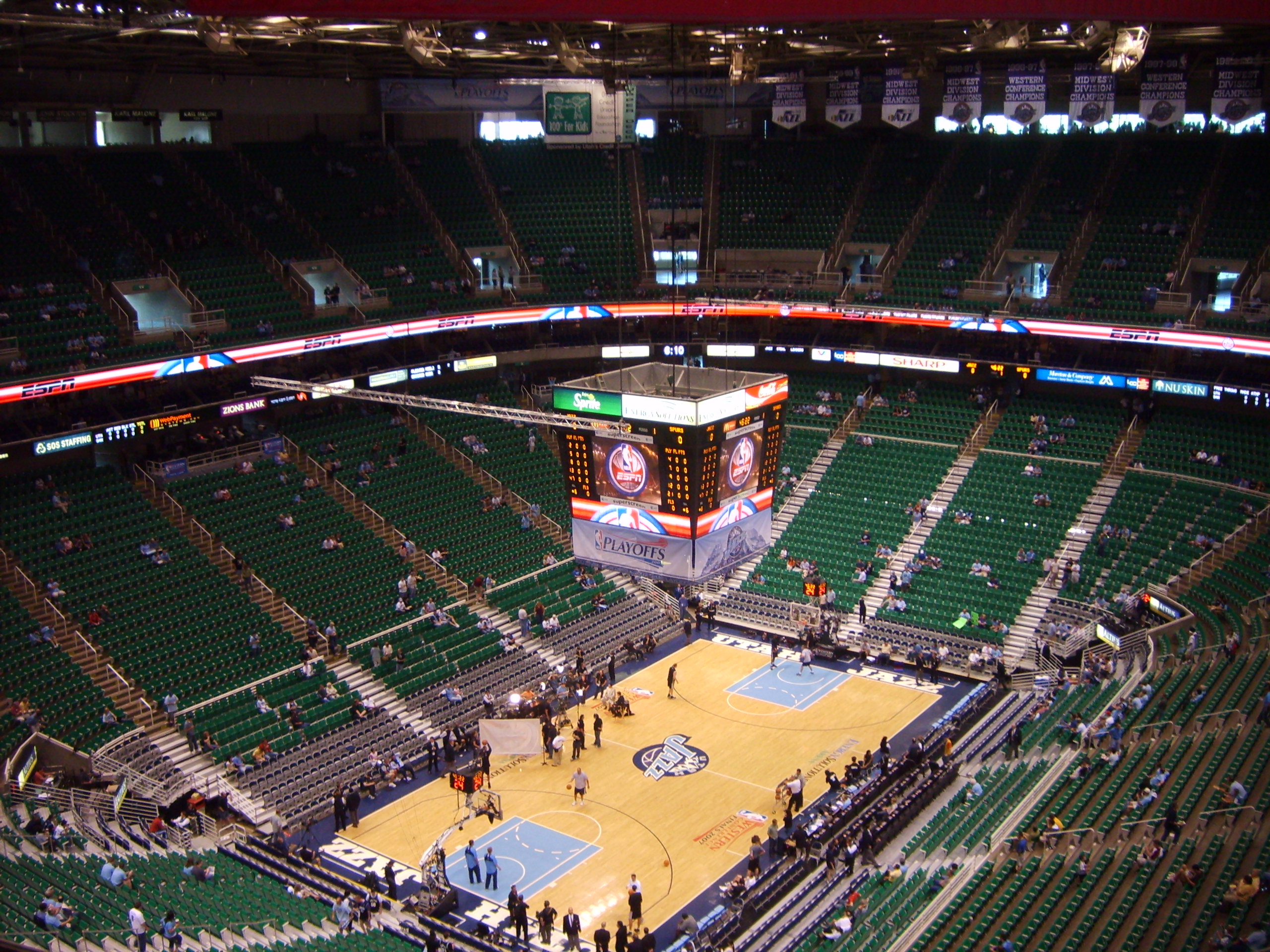
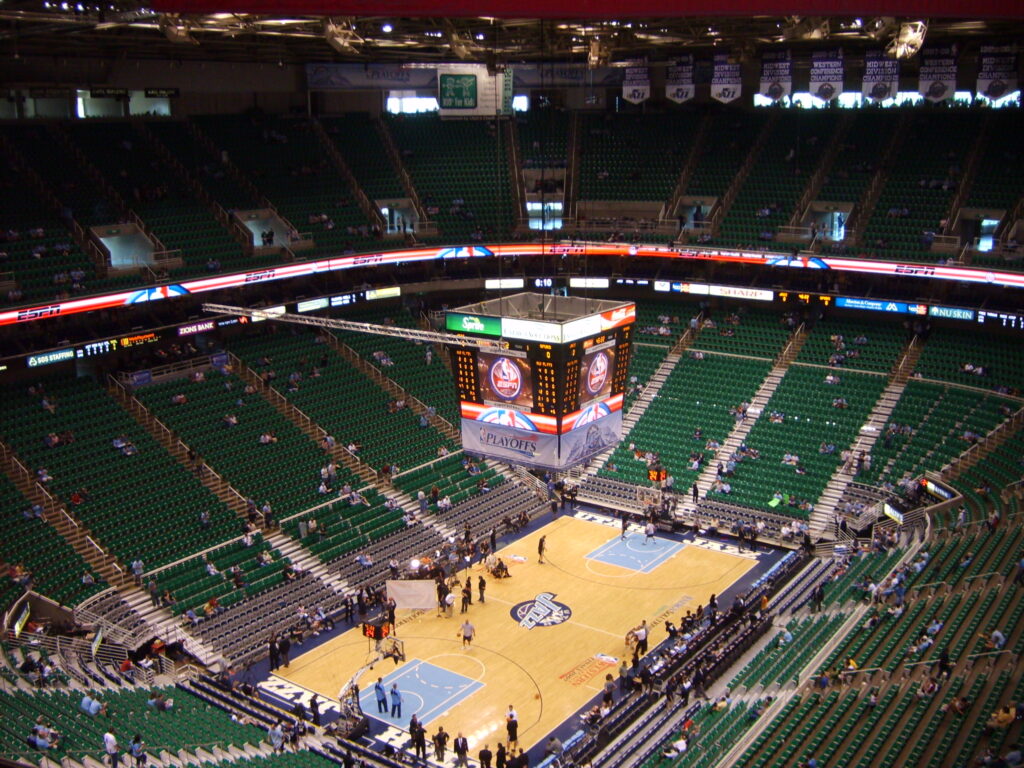
Delta Center is a premier multi-purpose indoor arena in Salt Lake City, Utah, functioning as a state-of-the-art dual-sport home for both the Utah Jazz of the National Basketball Association and the Utah Mammoth of the National Hockey League. Extensively modernized through multi-phase engineering overhauls, the arena features a tailored basketball configuration alongside a rapidly expanding, custom-retrofitted hockey seating bowl. Positioned as the premier indoor sports arena in the mountain west region, it hosts high-stakes professional leagues, major music tours, and elite international sporting events.
By Colin Hooten - Own work, Public Domain, Link
18.300
The construction of Delta Center began on June 11, 1990, to replace the aging Salt Palace arena, which could no longer support the growing infrastructural needs of the local National Basketball Association franchise. Designed by FFKR Architects, the arena officially opened on October 4, 1991. While originally built strictly as a basketball arena, the venue entered a transformative historical phase in April 2024 when the National Hockey League Board of Governors approved an expansion franchise for Salt Lake City, relocating the former Arizona Coyotes player roster to Utah. This addition permanently established the arena as a dual-sport venue. To accommodate this legacy shift, ownership group Smith Entertainment Group launched a massive multi-phase, inside-out structural overhaul in April 2025 to completely rebuild the event floor and lower bowl, permanently anchoring both professional basketball and top-tier ice hockey under one roof in downtown Salt Lake City.
The architectural definition of Delta Center centers on its distinctive square exterior shell and a highly compact interior seating bowl. The structure utilizes reinforced concrete and dark-tinted glass panels, topped by a flat roof system designed to handle heavy winter snowfall in Utah. The original 1991 configuration presented massive engineering challenges for ice hockey due to tight basketball-specific sightlines. To correct this, multi-year renovations initiated in 2025 completely gutted the event floor, raising the bowl floor by two feet and lengthening the event floor by 12 feet on each end to install a brand-new ice floor slab. A state-of-the-art custom riser system was engineered to accommodate a nearly 12-foot variance in elevation between rink and court endlines, ensuring unobstructed sightlines over the hockey glass. Acoustically, the low ceiling angles and steep concrete partitions compress crowd noise, magnifying the sounds of skates, puck impacts, and fan cheers to maintain its reputation as a highly intimidating indoor environment.
The official name Delta Center directly reflects its corporate naming partnership with Delta Air Lines, a relationship that began at the building opening in 1991 and was officially restored after a multi-year hiatus. Culturally, the stadium is widely recognized across the United States simply as the Delta Center, though visiting players and national media often refer to it as the loud house due to its intimidating acoustic properties. The arena is unique in hosting two major professional sports identities simultaneously. The long-standing tenants are the Utah Jazz of the National Basketball Association, whose classic purple, green, and gold colors dominate the facility. Since 2024, the arena also serves as the permanent home to Utah’s National Hockey League franchise, which played its inaugural season under the temporary name Utah Hockey Club before officially adopting the permanent identity of the Utah Mammoth in May 2025. The hockey club identity introduces rock black, mountain blue, and salt white into the arena branding, complete with the popular fan battle cry Tusks Up.
Delta Center has undergone several targeted modernization phases to transition from a single-sport arena into a state-of-the-art dual-sport facility. While the basketball capacity sits at 18206, the initial ice hockey configuration for the 2024 season featured an official capacity of only 11131 full-view seats due to severe basketball-centric sightline obstructions. Following the completion of phase one renovations ahead of the 2025-2026 winter season, workers removed walls on Level 3, opened up the end zone concourses, and installed new seating tracking to bring the official unobstructed hockey capacity up to 12478 seats. Ongoing multi-phase renovations scheduled through the 2026 and 2027 off-seasons will completely replace and reconfigure every seat in the building, ultimately driving the final ice hockey capacity to approximately 17000 seats and expanding basketball capacity to nearly 19000 seats. Premium club hospitality areas, including the newly remodeled Black Desert Club on Level 2, complement the seating bowl alongside integrated wheelchair-accessible viewing platforms.
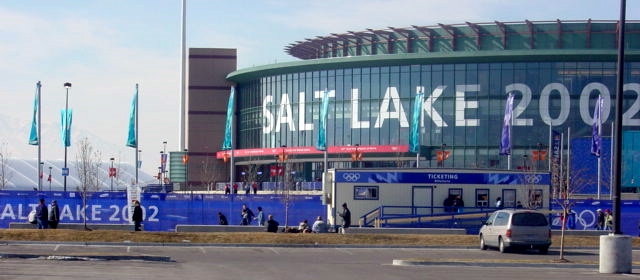
The sporting legacy of Delta Center is deeply rich, having hosted the 1997 and 1998 National Basketball Association Finals where the Utah Jazz battled the Chicago Bulls. In international sports, the arena served as a primary official venue during the 2002 Salt Lake City Winter Olympic Games under the temporary designation Salt Lake Ice Center, hosting the short track speed skating events and the figure skating competitions. The venue entered a new era of ice hockey legacy on October 8, 2024, when it hosted its inaugural regular-season National Hockey League game, securing a historic 5-2 victory over the Chicago Blackhawks. The arena achieved another milestone during the 2025-2026 National Hockey League season when the newly named Utah Mammoth clinched their first-ever Stanley Cup playoff berth on this ice, hosting intense postseason matches against the Vegas Golden Knights.
For the 2025-2026 season, the official unobstructed seating capacity for ice hockey is 12478 fans following the completion of phase one renovations. Upon the final completion of the ongoing multi-year dual-sport renovations, the hockey capacity will expand permanently to approximately 17000 full-view seats.
Delta Center is the official home ice of the Utah Mammoth, a National Hockey League franchise that entered the league in 2024. The team played its inaugural season under the temporary name Utah Hockey Club before revealing its permanent nickname, logos, and marks in May 2025.
The arena was originally designed in 1991 strictly for basketball sightlines, meaning the lower bowl concrete structures blocked views of the ice corners. The current multi-year renovations are completely restructuring the lower seating bowl, lengthening the floor, and raising the ice slab to provide unobstructed views over the glass.
Following the selection of the permanent team name by a fan vote, supporters at Delta Center utilize the official rally cry Tusks Up during home games. This chant celebrates the Utah Mammoth identity and refers to the unique U-shaped design of the team logo tusks.
No, while Delta Center was a major Olympic venue under the name Salt Lake Ice Center, it was primarily utilized for figure skating and short track speed skating. The official Olympic ice hockey tournament games in 2002 were held at the E Center in West Valley City and the Peaks Ice Arena in Provo.