Estadio Olímpico Patria
Sucre, Bolivia
Santa Cruz de la Sierra Bolivia
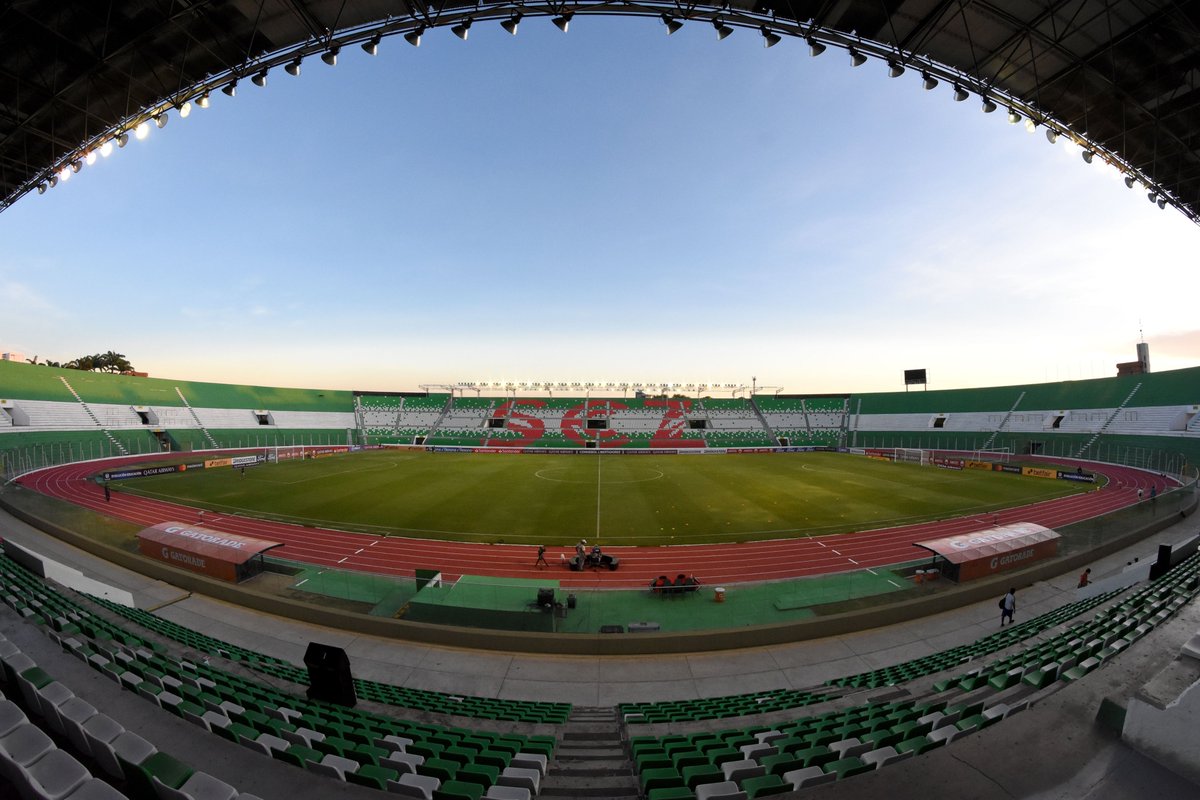
Estadio Ramon Tahuichi Aguilera is a historic multi-purpose sports arena located in the Bolivian city of Santa Cruz de la Sierra. The venue features an officially verified capacity of 38500 spectators and serves as the primary home ground for major professional football clubs including Club Deportivo Oriente Petrolero and Club Social Cultural y Deportivo Blooming. The stadium holds an official registration with CONMEBOL to host international tournament fixtures outside regular domestic leagues. Its concrete architectural singularity lies in its design as a sunken bowl structure where the pitch sits lower than the surrounding street levels, creating a unique microclimate and acoustic intensity.
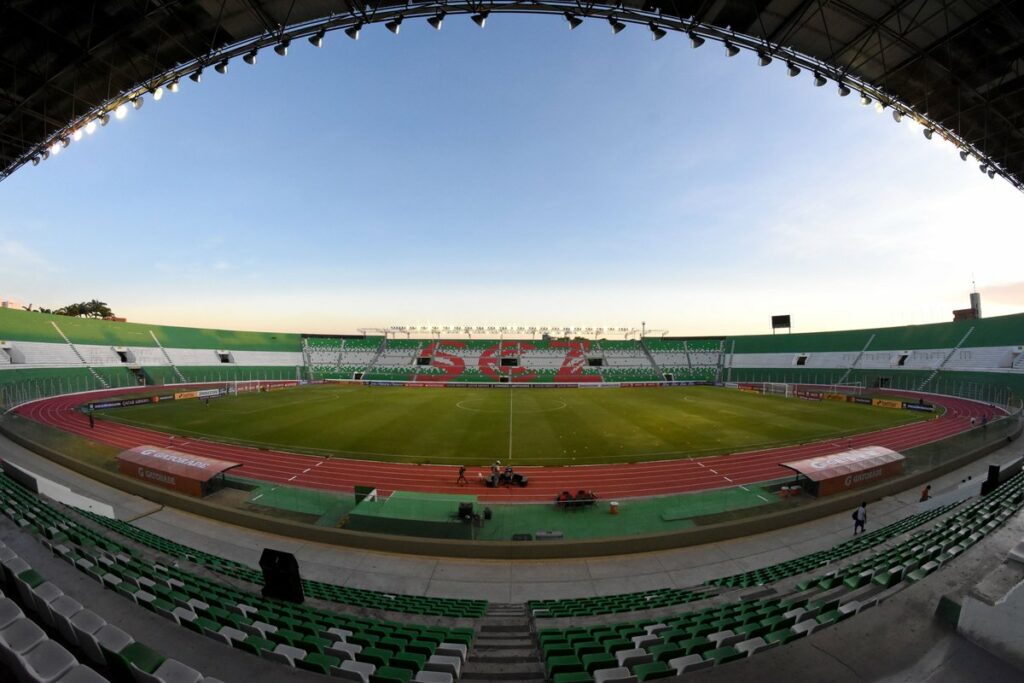
By Locowooq - Own work, CC BY-SA 4.0, Link
31.400
The initial construction of the sports complex began in the early years of the nineteen thirties, with the formal inauguration taking place under the original name of Estadio Departamental de Santa Cruz in 1940. The facility underwent major structural modernization and expansion projects during the late twentieth century to accommodate the rapid demographic growth of the city and the increasing organizational requirements of South American football. The ownership and institutional management of the property have remained under the control of the Government of the Santa Cruz Department throughout its history, guaranteeing its status as a public sporting monument.
The architectural configuration consists of a continuous oval bowl design built predominantly from heavy reinforced concrete elements. The main preferential stand features a large cantilevered concrete roof canopy that provides shelter to the premium seating sections, while the remaining curved terrace stands behind the goals are completely open to the tropical sky. The acoustic engineering of the sunken bowl layout functions like a natural amphitheater, reflecting the vocal noise of the crowd back down toward the pitch, which amplifies the sound levels significantly during high-stakes domestic league matches and continental tournaments.
The official name of the stadium pays tribute to Ramon Tahuichi Aguilera, a legendary youth football coach and founder of the world-renowned Tahuichi Academy who revolutionized sports training in Bolivia. Prior to this designation, the venue was widely known as Estadio Willy Bendeck. Local supporters and sports journalists frequently utilize the popular shortened nickname El Tahuichi when referring to the ground, reflecting its deeply ingrained status within the local football folklore of both Oriente Petrolero and Blooming fan bases in Santa Cruz de la Sierra.
The current capacity configuration of 38500 seats is distributed across four distinct main sectors known as Preferencial, General, Curva Oriente, and Curva Occidente. Major renovation programs were completed ahead of international tournaments like the 1997 Copa America, which included the installation of modern electronic scoreboards, upgraded floodlighting pylons, and expanded VIP hospitality lounges in the main stand. Further interior modernizations added physical plastic seating structures to the premium areas, while the large curved sections behind the goals retain their traditional open terracing format for maximum fan capacity.
The venue has hosted legendary international football tournaments, most notably serving as a primary host stadium during the 1997 Copa America, where elite national teams competed on its natural grass surface. It has also been the stage for numerous high-profile Copa Libertadores and Copa Sudamericana campaigns featuring the resident clubs. The local derby match between Oriente Petrolero and Blooming, known as the Clasico Cruceño, regularly packs the stands to absolute capacity, creating iconic sporting spectacles that define the football legacy of the region.
The sports arena is situated in the central urban area of Santa Cruz de la Sierra, located specifically between the second ring road and Avenue Army of Bolivia. The surrounding neighborhood is a bustling commercial and residential zone, featuring numerous local businesses, restaurants, and public parks. On matchdays, the entire perimeter experiences an intense and vibrant animation as thousands of fans converge on foot from nearby intersections, and local street vendors set up temporary stalls along the adjacent sidewalks hours before the gates open.
Navigating to the stadium is highly accessible via the extensive public transport network of Santa Cruz de la Sierra, with numerous local bus routes known as micros running directly along the second ring road and stopping near the main gates. Licensed city taxis provide a direct transport option from the historical city center, which sits roughly two kilometers to the north. For drivers, official on-site parking spaces are extremely limited, and nearby street parking is subject to heavy traffic congestion, while specific flat concrete accessibility entrances are available for spectators with reduced mobility, though exact entry logistics should be verified before your visit.
For the highest level of comfort, protection from the sun, and the best elevated view of the match, tickets in the covered Preferencial stand are the ideal choice. The General stand located opposite offers an excellent unobstructed view at a more economical price point but lacks roof coverage. The passionate local fan groups are firmly entrenched in the Curva sections, while traveling international visiting supporters are typically allocated a designated secured area within one of the upper curves, separated by security fencing and police corridors for safety.
Regularly scheduled public stadium tours and a dedicated sports museum are not currently available at this municipal facility. Groundhoppers and tourists interested in exploring the interior architecture or viewing historical sports trophies must coordinate with the local departmental sports service or visit the private social headquarters of the respective resident football clubs in the city. Access to the pitch or locker rooms outside of official sporting events is strictly restricted, and any special permissions for group visits should be verified before your visit.
The culinary landscape around the stadium offers a rich selection of traditional Bolivian street food and regional snacks. Outside the gates and inside the concourses, vendors sell local specialties such as salteñas, cuñapés, and majadito, alongside standard international soft drinks. While alcohol sales inside the stadium perimeter are restricted during domestic league fixtures, the surrounding commercial streets feature numerous local bars and restaurants where home supporters gather to consume local beers before passing through security.
Security protocols at the stadium entrances are strict, involving thorough physical body searches and ticket verifications conducted by the national police and club stewards. For high-profile matches like the Clasico Cruceño, extensive security cordons are established multiple blocks away from the stadium, and arriving at least two hours prior to kickoff is highly recommended to avoid crowd crunches. The internal concession stands operate entirely on cash payments, and prohibited items include firecrackers, glass containers, large umbrellas, and rigid flagpoles.
Permanent multi-level megastores do not operate inside the stadium structure itself on non-matchdays. Instead, both Oriente Petrolero and Blooming maintain their official flagship club boutiques and administrative stores located in separate commercial areas of Santa Cruz de la Sierra. On matchdays, authorized merchandise stalls and mobile club trailers are set up inside the stadium gates, allowing fans to purchase official jerseys, caps, and scarves, though specific operational hours for these temporary points should be verified before your visit.
The officially verified capacity of the stadium is 38500 spectators. The seating is divided into premium covered seating areas and large open-air standing curves behind the goals.
The stadium serves as the primary home venue for the prominent Santa Cruz professional football clubs Oriente Petrolero and Blooming. Both teams host their domestic and continental fixtures here.
The venue is located approximately two kilometers south of the historical central plaza of the city. It can be reached easily in ten minutes by taxi or local micro buses.
Yes, major clubs increasingly utilize online ticketing platforms for matchday sales, though physical ticket booths at the stadium gates remain operational on matchdays. It is recommended to check club channels for specific high-risk fixtures.
No, standard safety regulations prohibit the sale and consumption of alcoholic beverages inside the stadium bowl during official football matches. Fans typically utilize the bars in the surrounding neighborhood before entry.