Aviva Stadium
Dublin, Ireland
Cork Ireland
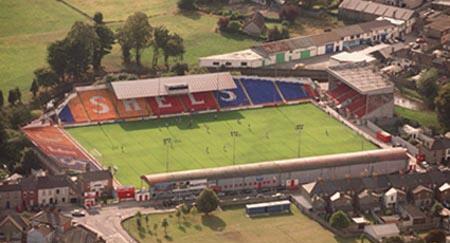
Turners Cross is a historic association football venue located in the Turners Cross suburb of Cork, with an official capacity of 7485 spectators. Serving as the primary home ground for Cork City FC, this compact stadium stands out as Ireland’s first fully all-seated and all-covered stadium. The venue meets elite standards for domestic League of Ireland and international UEFA club competition fixtures.
7.385
The site of Turners Cross was originally leased by Cork Constitution in 1897 for rugby and cricket before transitioning to association football use by 1905. Following a period of multi-sport use, the Football Association of Ireland secured a long-term lease on the grounds in 1940 to establish a permanent football hub in the region. The stadium was later operated by the Munster Football Association, which took control in the 1980s. A series of major developments transformed the traditional ground, replacing the old terraces with modern seated stands. This decades-long evolution culminated in 2009 with the completion of a modern reconstruction program, turning the historic municipal ground into a fully enclosed professional sporting venue.
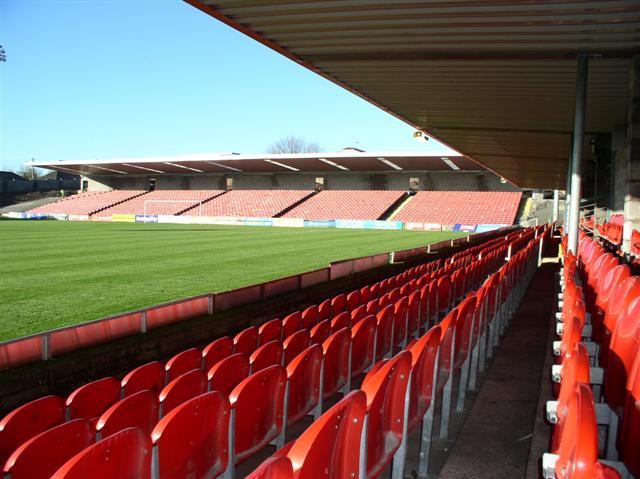
The stadium features a highly compact, rectangular bowl layout designed to maximize spectator sightlines and proximity to the pitch. Constructed with a mix of steel framing and precast concrete, the four independent stands are equipped with individual cantilever roof structures. This cantilever design eliminates obstructive supporting pillars for the vast majority of spectators, ensuring an unobstructed view of the grass playing surface. The low, sloping metal roofs on all four sides are engineered to trap sound inside the ground, reflecting the vocal support of the fans directly back onto the pitch to create a highly intense, closed-box acoustic environment.
The stadium is named after the surrounding Turners Cross residential suburb in southern Cork, a name deeply embedded in local geography. Among supporters and Irish football enthusiasts, the ground is affectionately known simply as The Cross. Historically, the stadium also carried the popular nickname of The Box, which referred to its tight, enclosed, and intimate rectangular design. The venue is deeply tied to the green, white, and red identity of Cork City FC, the premier professional club in the region, whose badge and colors decorate the modern seating tiers.
Turners Cross underwent a complete transformation during a phased modernization program that took place throughout the 2000s. The historic covered terrace known as The Shed was demolished and replaced by the modern, 1600-seat Joe Delaney Stand at the eastern end, which opened in March 2007. The final stage of redevelopment was completed in 2009, bringing the total official seating capacity to 7485. The stadium configuration is divided into four distinct covered stands: the Donie Forde Main Stand on the west side seating 1900, the St Anne’s Park End on the north side seating 2800, the Joe Delaney Stand on the east side seating 1600, and the Derrynane Road Stand on the south side seating 1185.
Turners Cross has hosted some of the most memorable nights in modern Irish club football, particularly during European campaigns. On April 21, 1991, a record crowd of twelve thousand spectators packed into the ground to witness a historic league encounter between Cork City FC and Dundalk. The stadium also hosted memorable European nights, including a scoreless draw against Bayern Munich in 1991 and UEFA Champions League qualifiers. In domestic competition, the stadium served as the backdrop for Cork City FC when they secured the League of Ireland Premier Division title in 2005 and 2017, sealing their status as a dominant force in Irish football.
The stadium is situated in the suburban district of Turners Cross, located approximately two kilometers directly south of Cork city center. The neighborhood is predominantly a traditional, close-knit residential area, flanked by local schools and community parks. On matchdays, the quiet suburban streets of Curragh Road and Derrynane Road undergo a complete transformation, filled with thousands of supporters walking from the city center toward the turnstiles, creating a classic, community-focused matchday atmosphere in the hours leading up to kickoff.
Reaching the stadium is highly straightforward, with the walk from central Cork taking approximately fifteen to twenty minutes. For those utilizing public transit, Bus Eireann operates multiple local routes directly through the area, including the 203 bus from Farranree via the city center and the 206 bus from South Mall, both of which stop near Curragh Road (à vérifier avant votre visite). There is no official public car park at the stadium, meaning supporters arriving by car must rely on street parking in the surrounding residential zones (à vérifier avant votre visite). Dedicated wheelchair accessible viewing spaces are located in both the Curragh Road Stand and the St Anne’s End, offering level access and excellent sightlines.
For the best overall view of the pitch and access to premium facilities, seats in the Donie Forde Main Stand are highly recommended. If you prefer a highly active and family-friendly environment, the family enclosure situated near the St Anne’s End is an excellent choice. Visiting supporters traveling to Cork are typically allocated a dedicated, segregated block of seats within the St Anne’s Park End behind the northern goal, which is accessed via separate turnstiles on the St Anne’s Park side of the ground.
While Turners Cross does not operate a daily, large-scale stadium tour or a permanent public museum, the club and the Munster Football Association occasionally coordinate special historical tours, school visits, and community open days (check before your visit). These special access events typically allow fans to see the dressing rooms, walk the tunnel, and view historical club memorabilia. For standard matchday visits, access is restricted to ticket holders, and general public tours are not available on the day of a game (check before your visit).
Before kickoff, home and away supporters gather at popular local establishments near the ground, with the Horseshoe Inn on Curragh Road and the Turner’s Cross Tavern being two of the most famous matchday pubs. For street food, local chip vans and vendors operate around the stadium perimeter, offering classic matchday hot chips and burgers. Inside the turnstiles, food kiosks sell a variety of warm snacks, hot pies, tea, coffee, and soft drinks to keep supporters warm during evening matches.
Matches against regional rivals, such as local Munster derbies, feature increased security measures and designated segregated routes for away fans approaching the stadium. Turnstiles typically open one hour before the scheduled kickoff, and supporters are advised to arrive early to avoid queues at the narrow residential entry points. Standard stadium regulations apply, meaning large bags, bottles, cans, umbrellas, and pyrotechnics are strictly prohibited inside the ground.
The official club shop is operated by Cork City FC and is located directly at the Turners Cross stadium site, selling a wide range of official team apparel, scarves, hats, and accessories on matchdays (à vérifier avant votre visite). Outside of matchdays, the club runs an online retail store providing domestic and worldwide shipping. Because opening hours for the physical stadium shop can vary during the off-season and non-match weeks, visitors should verify operational hours before traveling specifically to buy merchandise (à vérifier avant votre visite).
The stadium has an official all-seated capacity of 7485 spectators, with all four stands fully covered by cantilever roofs.
Cork City FC is the primary resident professional club playing its home matches at the stadium in the League of Ireland.
There is no official spectator parking at Turners Cross, so fans are advised to walk from the city center or use local residential street parking.
Visiting supporters are allocated a dedicated, covered seating section within the St Anne’s Park End behind the northern goal.
The stadium is owned and operated by the Munster Football Association, serving as the headquarters for football in the province.