Generali Arena
Vienna, Austria
Vienna Austria
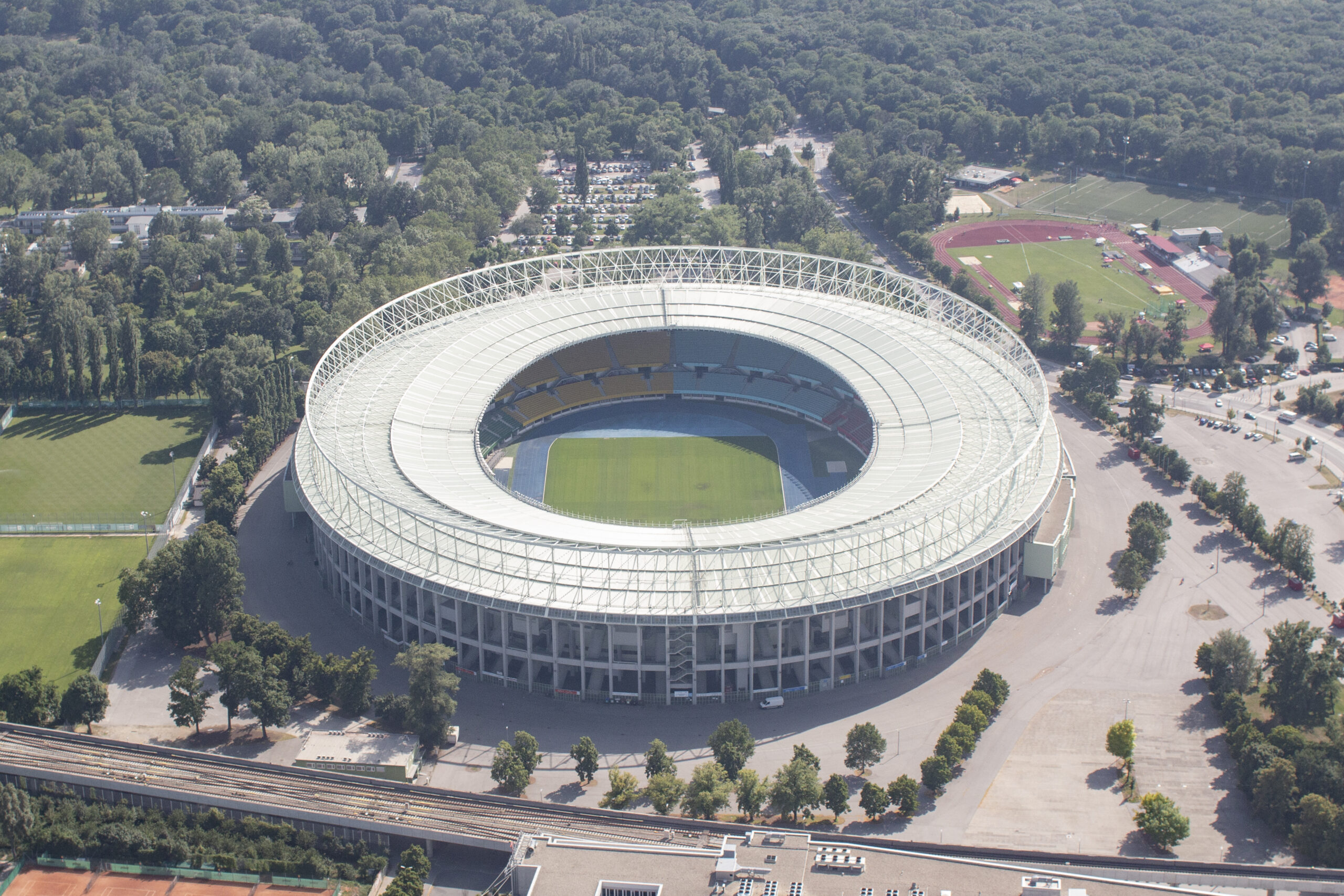
Ernst Happel Stadion is the historic national stadium of Austria, situated in the capital city of Vienna with an official football capacity of 50,865. Classified as a prestigious UEFA Category 4 Stadium, this iconic oval venue serves as the primary home for the Austria national football team and stands as a monumental piece of European sports architecture.
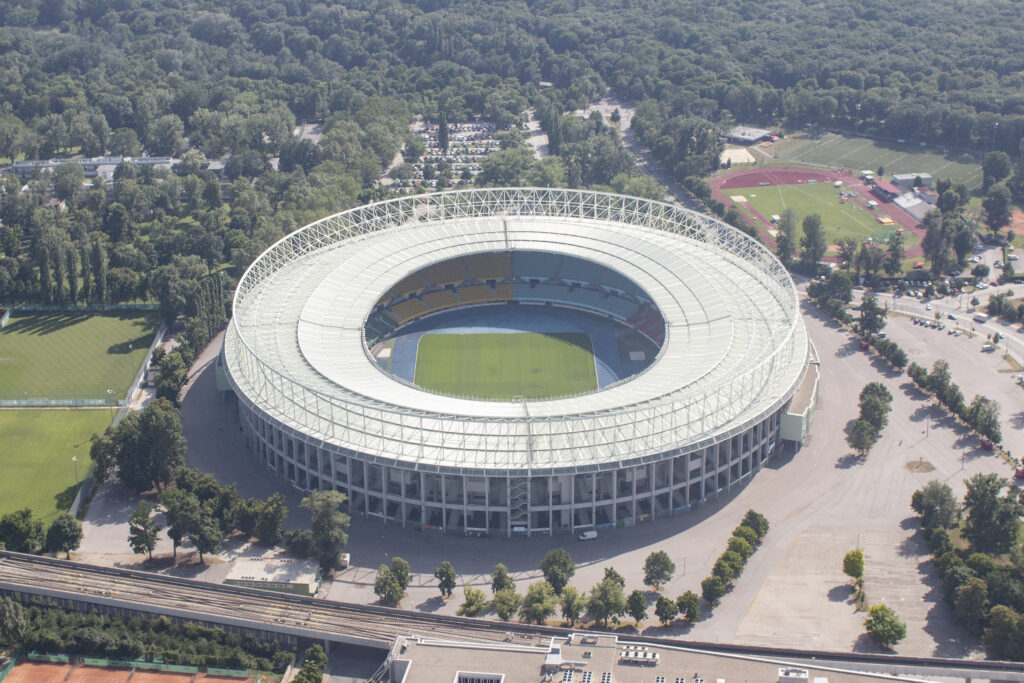
By Arne Müseler / www.arne-mueseler.com, CC BY-SA 3.0 de, Link
50.865
Construction of the venue began with a foundational groundbreaking ceremony in 1929, following the structural designs of specialized German architect Otto Ernst Schweizer. Officially opened on July 11, 1931, the facility was originally named the Praterstadion due to its location within the famous Prater park district. The building underwent its first major structural transformation in the mid-1980s when a comprehensive roof installation turned it into a fully covered arena. Following the passing of legendary Austrian football player and manager Ernst Happel in 1992, the City of Vienna formally renamed the municipal monument in his honor, preserving its institutional legacy for future generations of sports fans.
The stadium features a classic oval concrete bowl layout that incorporates an integrated running track around the natural grass pitch. The most prominent engineering feature is the sweeping, continuous roof structure that was added during the 1986 modernization phase, supported by a system of external steel columns. This expansive roof design acts as a massive acoustic shell, capturing the vocal support of the crowd and projecting it back down onto the playing surface. While the presence of the athletics track places spectators further from the touchline than in modern purpose-built football arenas, the symmetrical tiers provide uniform sightlines across the entire historic bowl.
The official name honors Ernst Happel, widely regarded as the greatest Austrian football figure in history, who achieved historic success as both an international player and a European Cup-winning manager. Prior to 1992, the venue was known exclusively as the Praterstadion, named after the expansive public park and amusement area in which it sits. Locally, older generations of supporters and groundhoppers still refer to the venue simply as the Prater, a geographical nickname that connects the sports monument directly to the cultural heart and recreational history of Vienna.
Significant modernization phases occurred ahead of the 2008 UEFA European Championship, an event for which the stadium served as the centerpiece venue. These renovations included upgrading the internal hospitality infrastructure, expanding press facilities, and integrating a modern electronic access system. The seating configuration is organized into a continuous multi-tiered concrete bowl split into color-coded sectors, including the prominent main stand and the vibrant fan curved sections. Dedicated VIP boxes, executive loges, and accessible seating areas for spectators with limited mobility are fully integrated into the main grandstand structure.
The venue holds an illustrious position in football history, having hosted five European Cup and UEFA Champions League finals, including the historic 1995 final where Ajax defeated AC Milan. It also served as the final venue for the 2008 UEFA European Championship, where Spain defeated Germany to claim the continental trophy. On the domestic stage, while the Austria national football team is the primary tenant for major international fixtures, local clubs Rapid Vienna and Austria Vienna have frequently utilized the stadium for high-profile European club competitions. The all-time attendance record was set on October 30, 1960, when an astonishing 90,726 spectators witnessed an international match between Austria and Spain.
The stadium is located in the Leopoldstadt district, approximately three miles east of the central old town of Vienna. Situated within the expansive greenery of the historic Prater park, the immediate surroundings offer a unique blend of natural woodlands and recreational spaces. On match days, the wide tree-lined avenues and public paths leading to the stadium fill with thousands of fans arriving on foot. The nearby Prater amusement park, featuring the famous giant Ferris wheel, provides an energetic pre-game backdrop filled with traditional food stalls and local beer gardens.
The stadium is exceptionally well-connected to the Vienna public transit network, primarily via the U-Bahn underground system. Fans can take the U2 subway line directly to the Stadion station, which is specifically designed with wide platforms to handle massive match-day crowds efficiently. Additionally, several municipal bus routes and tram lines service the surrounding Prater area (all services should be verified before your visit). Accessible routes, specialized elevators, and dedicated parking spaces are provided for visitors with disabilities, ensuring step-free access into the main seating tiers (to be verified before your visit).
For the finest unobstructed views of the pitch, the covered seats in the main grandstand offer premium comfort and excellent positioning. Budget-conscious groundhoppers often prefer the upper tiers of the side stands, which provide a fantastic bird’s-eye view of the tactical movements on the pitch despite the distance caused by the running track. The vocal home ultras pack the sectors behind the goal, while traveling away supporters are typically allocated a specific upper-tier corner section of the stadium structure, ensuring safe separation and clear lines of sight.
Guided stadium tours are occasionally made available through special arrangements or specific event operators, granting football enthusiasts access to the historic players’ tunnel, dressing rooms, and VIP hospitality areas. Because public availability is highly dependent on the national team training schedule and major concert bookings, reservations must be checked and booked in advance through official municipal or football association channels (to be verified before your visit). Historic memorabilia displays and plaques honoring Ernst Happel and iconic Austrian football milestones can be viewed around the main reception concourses.
Pre-game culinary options are heavily influenced by Viennese traditions, with numerous permanent and temporary food kiosks operating throughout the Prater park area. Traveling fans can indulge in local specialties such as traditional Austrian sausages, including Käsekrainer and Bratwurst, served with mustard and horseradish. Local Austrian beer brands, such as Ottakringer or Gösser, are widely available at concession stands around the perimeter and inside the concourses. For a more sit-down experience, fans often gather at the historic beer gardens located within the wider park grounds before heading toward the turnstiles.
Security procedures are strictly maintained at all main entry gates, with thorough body searches and bag inspections carried out by stadium stewards. Large bags and backpacks are generally prohibited inside the seating bowl, so visitors are advised to travel light. The stadium concourses utilize modern payment infrastructure, accepting major credit cards and debit cards alongside contactless mobile payment options. Doors typically open two hours before kick-off for major international matches, and early arrival via the underground network is highly recommended to avoid peak transit congestion.
While there is no permanent daily mega-store structure built into the stadium fabric itself, the Austria national football team and participating clubs set up extensive official merchandise mega-tents and mobile retail trucks across the stadium plazas on match days. These retail outlets offer a wide array of official team jerseys, scarves, and commemorative match-day programs. For shopping on non-event days, fans can visit the permanent flagship club stores located in downtown Vienna or utilize the official online retail platforms (to be verified before your visit).
The venue was originally opened in 1931 as the Praterstadion, named after the famous public park district in Vienna where it was constructed, before being renamed in 1992.
The most efficient route is to take the Vienna U-Bahn underground line U2 directly to the Stadion station, which drops spectators just a short walking distance from the main entrance gates.
The stadium features an official all-seated capacity of 50,865 spectators for football matches, though it can accommodate larger crowds for center-stage concert configurations.
The stadium hosted several historic matches during the 2008 UEFA European Championship, including the grand final where Spain defeated Germany to win the trophy.
Yes, the surrounding Prater park district features numerous traditional Austrian food stalls, kiosks, and historic beer gardens where fans gather before kick-off.