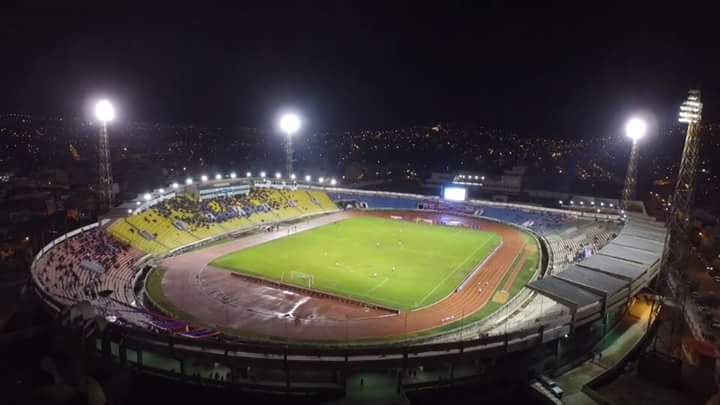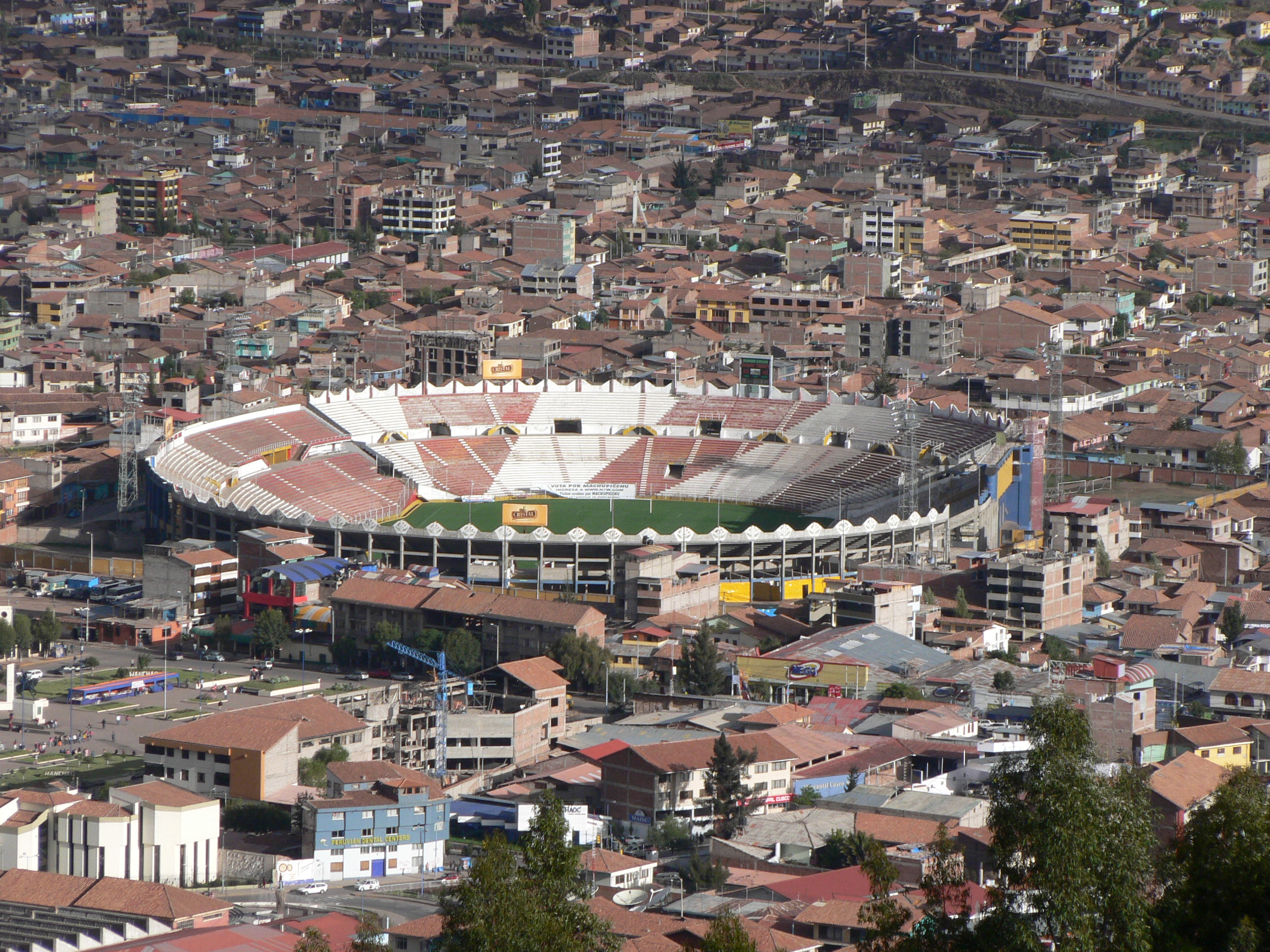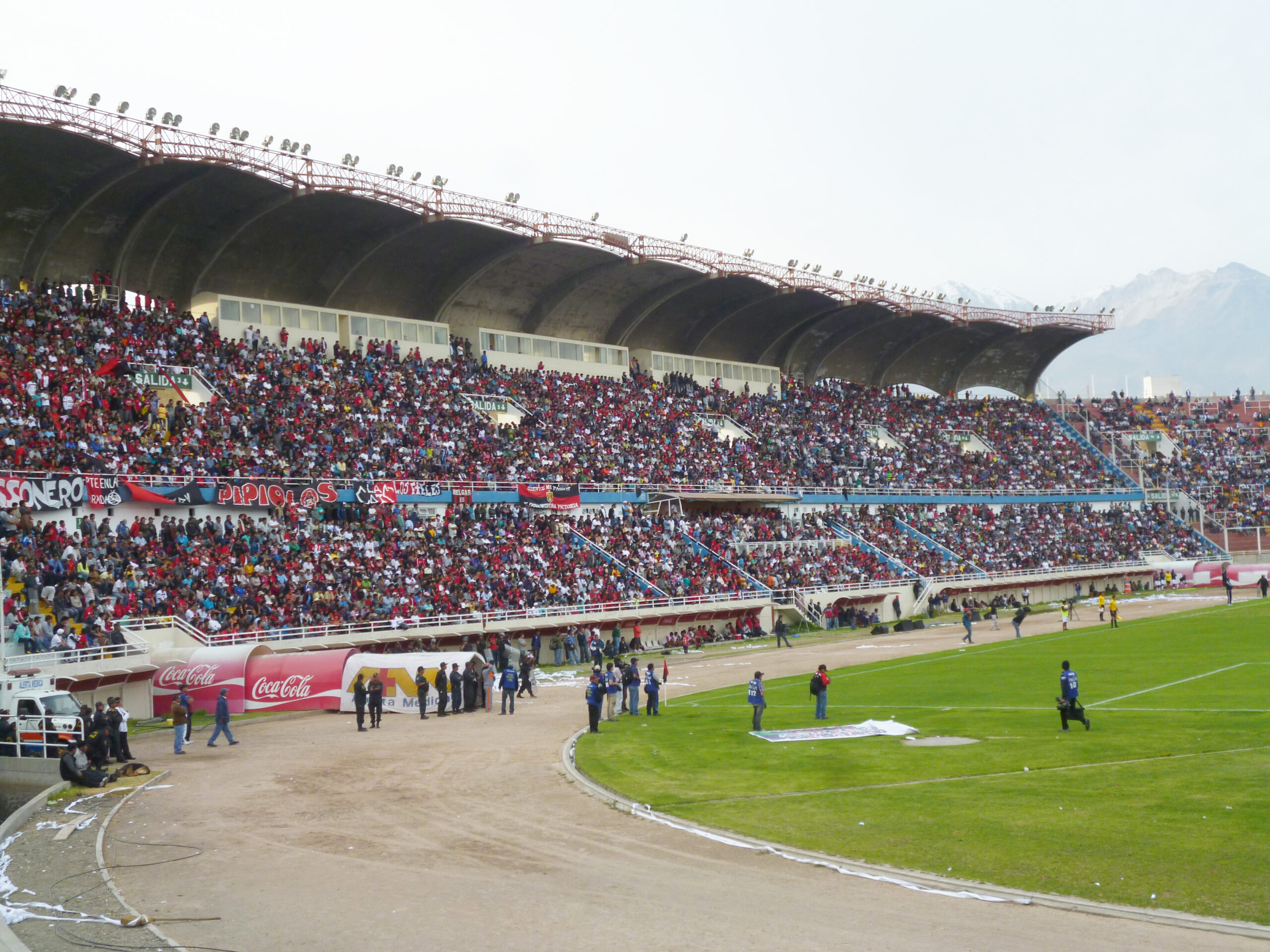
Estadio Monumental Virgen de Chapi
Arequipa, Peru
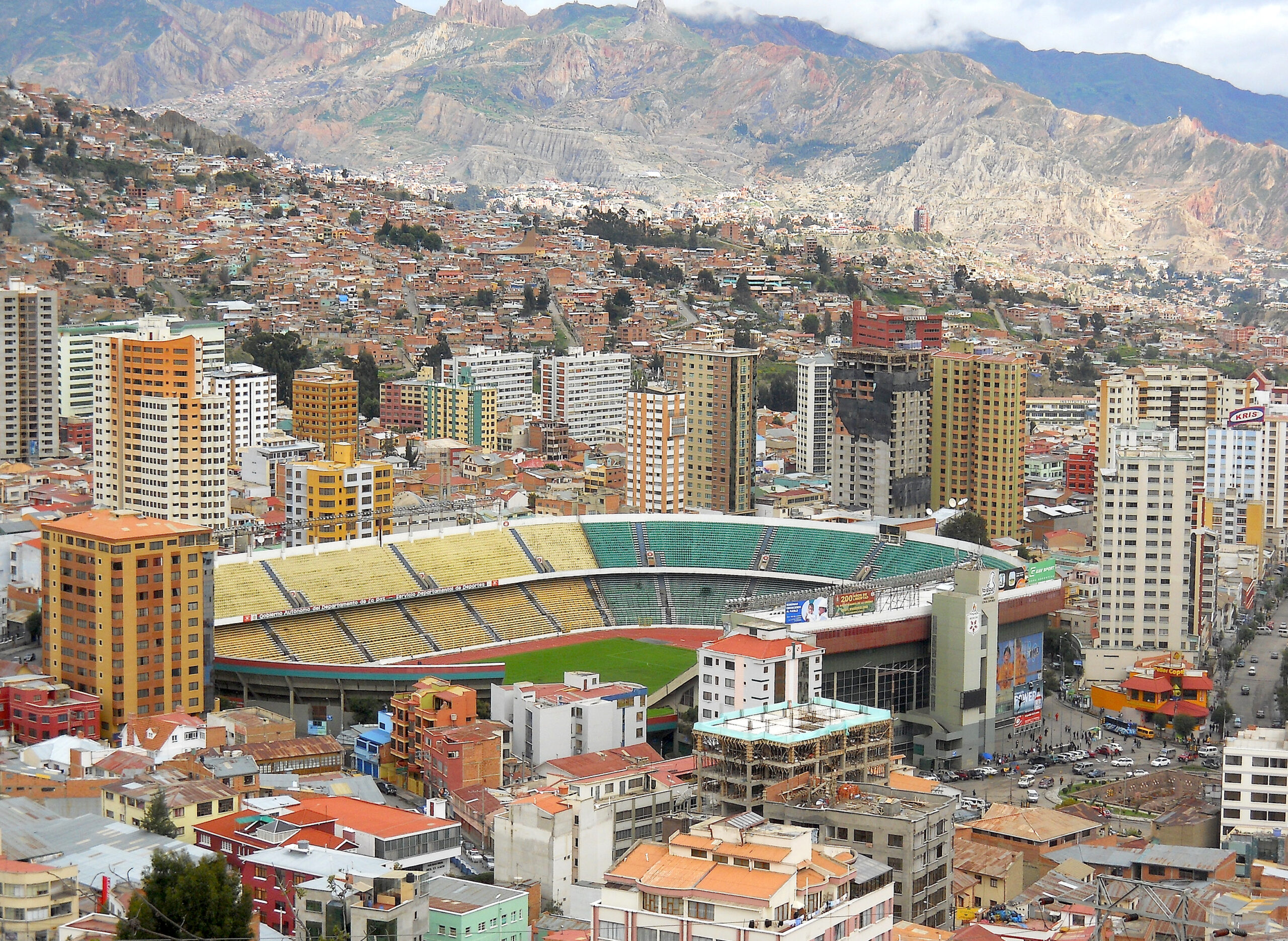
La Paz Bolivia
Estadio Hernando Siles is a legendary multi-purpose sporting venue located in the Miraflores borough of La Paz, with an official capacity of 41143 spectators. Serving as the iconic home ground for rivals Club Bolivar and Club The Strongest, this stadium sits at a breathtaking altitude of 3582 meters above sea level.
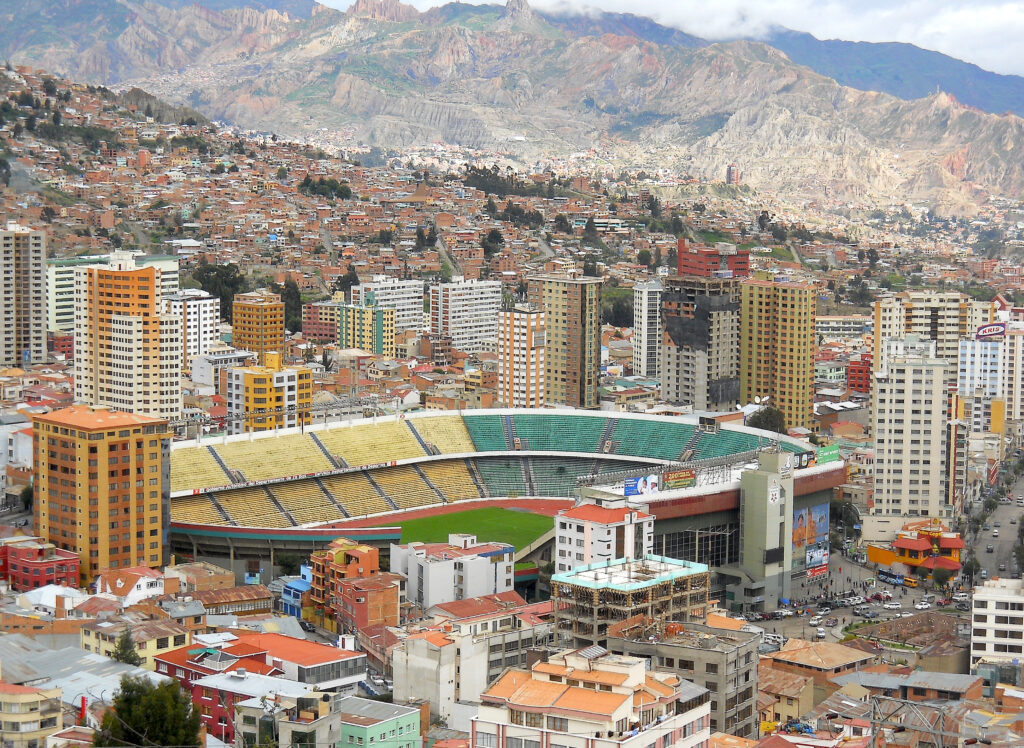
By psyberartist - https://www.flickr.com/photos/psyberartist/5471854624/, CC BY 2.0, Link
41.143
The construction of Estadio Hernando Siles began in the late 1920s to establish a state-of-the-art multi-sport stadium for the nation. The venue officially opened on January 16, 1930, named in honor of the thirty-first president of Bolivia who championed its development. For several decades, the ground featured a traditional open-air concrete design typical of mid-century South American arenas. A complete rebuilding program was initiated in 1975 to prepare the venue for the 1977 Bolivarian Games, which substantially expanded the stands and modernized the supporting facilities. The stadium later transitioned to an all-seater configuration in 2007, securing its place as the definitive historical monument of Bolivian association football.
The architecture of the stadium is a classic example of twentieth-century South American civic engineering, constructed entirely from reinforced concrete. The venue is designed as a vast oval bowl surrounded by a professional athletics track, ensuring open sightlines from all spectator areas. True to traditional regional designs, the stadium features completely open-air stands with no roof covering, exposing spectators directly to the Andean elements and the high-altitude sun. The steep, towering concrete tiers of the stands act as a massive acoustic wall, trapping and reflecting the roar of the crowd downward toward the running track and the playing pitch.
The stadium is named Estadio Hernando Siles to honor Hernando Siles Reyes, the highly influential politician who served as the president of Bolivia during the late 1920s and authorized the creation of this landmark sports complex. Local fans and the Bolivian sports press frequently refer to the venue as El Nido de los Condores, meaning The Condors Nest, a poetic reference to its extreme, mountain-ringed elevation. The ground possesses a shared club identity, serving as the home turf for both Club Bolivar and Club The Strongest, whose distinct sky blue and yellow-and-black colors dominate the stands during local league matches.
The most significant renovation of the stadium took place between 1975 and 1977, which doubled the size of the original structure to accommodate the Bolivarian Games. In 2007, structural modifications were carried out to install individual seating across the terraces, reducing the official capacity to the current 41143 seats to meet international safety protocols. The stadium configuration features a main double-decked grandstand known as Preferencia, a lateral stand opposite called General, and two large semicircular curves behind the goals named Curva Norte and Curva Sur, which house the most passionate local supporter groups.
The stadium is famous for historic football results, particularly when the Bolivia national football team utilizes the thin air to defeat continental giants. In 1993, Bolivia secured a historic two to zero victory over Brazil in a World Cup qualifier, handing the Brazilians their first-ever defeat in World Cup qualifying history. On April 1, 2009, the national team achieved a monumental six to one victory over an Argentina team managed by Diego Maradona, marking one of the most famous results in modern South American qualifying. The ground also hosted the matches of the 1997 Copa America, where Bolivia marched all the way to the final before falling to Brazil.
The stadium is located in the central Miraflores neighborhood of La Paz, positioned approximately one and a half kilometers east of the historic city center and Plaza Murillo. The surrounding district is a lively mix of commercial offices, residential high-rises, and medical facilities, giving the area a bustling urban feel. On matchdays, the streets immediately surrounding the stadium, especially Avenida Saavedra and Calle Diaz Romero, are closed to vehicular traffic as thousands of fans clad in club colors create a festive, high-energy atmosphere hours before the gates open.
The most reliable and scenic way to reach the stadium from various parts of La Paz is by utilizing the Mi Teleferico cable car network, with the White Line (Linea Blanca) stopping directly at the Plaza Villarroel station within walking distance (à vérifier avant votre visite). Numerous local mini-buses, known as minibuses or trufis, travel along Avenida Saavedra from the city center directly to the stadium gates (à vérifier avant votre visite). Taxis are also widely available and highly affordable, though street congestion around Miraflores increases significantly on matchdays, making walking from the historic center a viable twenty-minute alternative.
For the most comfortable matchday experience, seats in the Preferencia stand are recommended as they offer the best facilities, cushioned seating, and the only covered areas in the stadium. The General stand opposite offers an excellent, unobstructed panoramic view of the entire pitch and the surrounding mountains but is fully exposed to the sun. Visiting supporters are typically directed to a designated, segregated section in either the Curva Norte or the upper tiers of the General stand, depending on safety requirements and the specific tournament regulations.
While Estadio Hernando Siles does not offer a daily, structured public stadium tour program, the SEDEDE municipal authority occasionally coordinates access for educational and sports history groups (check before your visit). A small sports museum highlighting the history of Bolivian athletics, Olympic participation, and historic national team victories is housed within the stadium administrative offices, though access is usually restricted to specific weekdays (check before your visit). For most independent travelers, appreciating the architecture from the outside or purchasing a ticket to a local league fixture remains the best way to experience the interior.
Before entering the turnstiles, the streets of Miraflores offer an array of traditional Bolivian street food, with vendors selling salteñas, which are baked meat pastries, and anticuchos, which are grilled beef heart skewers. Local cafes and casual restaurants line Avenida Saavedra, where fans gather to discuss tactics over local beverages. Inside the concrete concourses, vendors sell soft drinks, water, and traditional snacks, though the sale and consumption of alcoholic beverages are strictly prohibited inside the sporting venue during professional football matches.
Due to the thin air at thirty-five hundred meters, first-time visitors to the stadium are strongly advised to acclimatize in La Paz for at least twenty-four to forty-eight hours before climbing the stadium stairs. Security checks at the outer perimeter are thorough, meaning spectators must present their physical tickets and undergo manual pat-downs. Large bags, backpacks, professional video equipment, plastic bottles, and flags with rigid poles are not permitted inside. It is recommended to bring high-factor sunscreen, sunglasses, and a warm jacket, as temperatures drop rapidly in La Paz once the sun sets.
Club Bolivar and Club The Strongest operate their own independent, official merchandise stores located in different commercial districts of La Paz rather than sharing a single megastore at the stadium site (à vérifier avant votre visite). Official team jerseys, scarves, and club souvenirs can also be purchased at authorized retail outlets in the Sopocachi and Zona Sur neighborhoods (à vérifier avant votre visite). On matchdays, numerous unofficial street stalls set up around the perimeter of Avenida Saavedra, selling affordable souvenirs, hats, and team colors to arriving fans.
The stadium is located at an altitude of 3582 meters above sea level, making it one of the highest professional sporting venues on the planet.
The two most successful clubs in Bolivian football history, Club Bolivar and Club The Strongest, share the stadium for their home matches.
While formal daily tours are not standard, visitors can walk around the exterior plaza and view the impressive facade, or arrange special municipal visits in advance (check before your visit).
The Preferencia stand is the premier seating area, offering superior comfort, better amenities, and partial protection from the high-altitude sun.
In 2007, FIFA introduced a ban on high-altitude matches over health concerns and unfair sporting advantages, but the ruling was lifted following intense political protests from Andean nations.