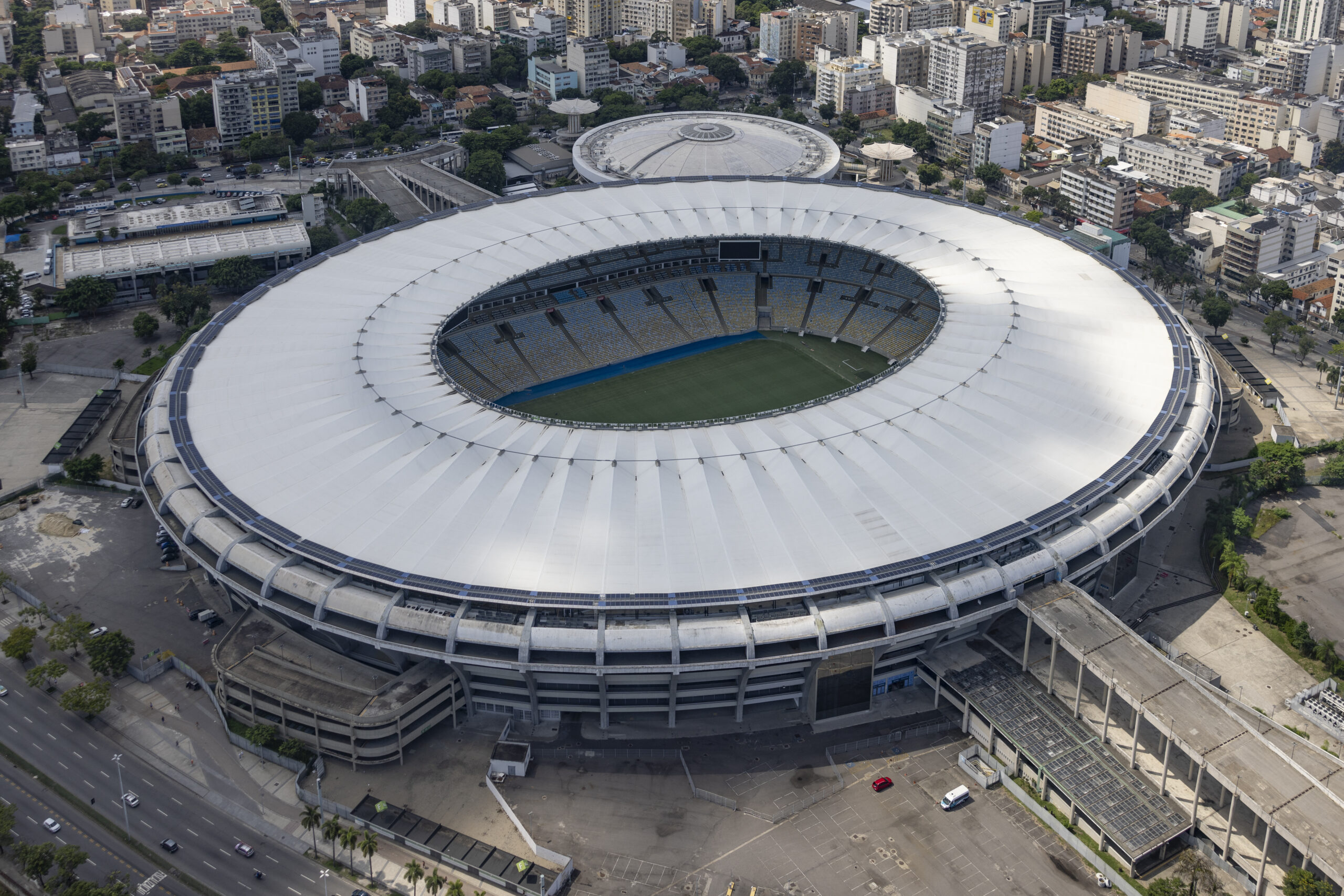
Estádio do Maracanã
Rio de Janeiro, Brazil
Rio de Janeiro Brazil
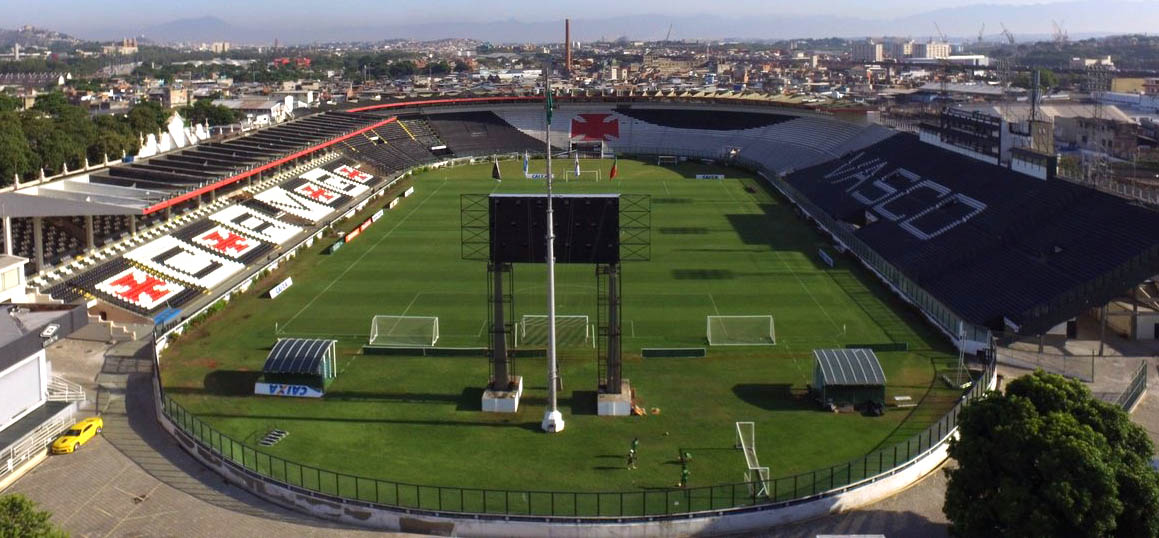
Estádio Vasco da Gama, aka São Januário, is a historic football stadium located in Rio de Janeiro, Brazil. It serves as the home ground of Club de Regatas Vasco da Gama and was once the largest stadium in Brazil. Known for its iconic architecture and deep connection to Vasco’s history, it remains one of the most significant football venues in the country.
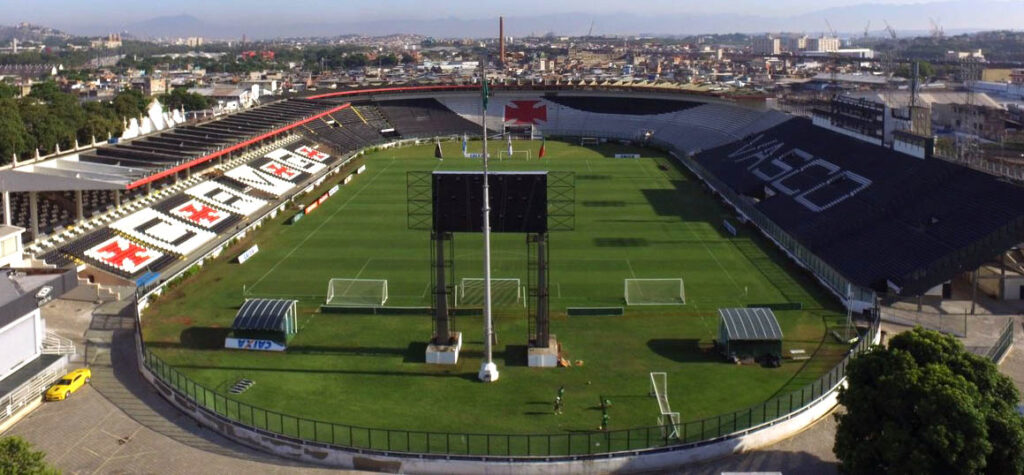
By Bernardo1989 - Cropped and enhanced from this image, CC BY-SA 4.0, Link
24.584
São Januário Stadium was inaugurated on April 21, 1927, in the São Cristóvão neighbourhood of Rio de Janeiro, Brazil. It was constructed as the home ground of Club de Regatas Vasco da Gama and, at the time of opening, was the largest stadium in Brazil. The venue played a central role in Brazilian football history in the early and mid-20th century.
The stadium features a classic rectangular football layout with seating surrounding the pitch. Its main stand is noted for its imposing architecture, reflecting early 20th-century design influences. The overall structure emphasizes spectator proximity and a traditional football stadium atmosphere.
At its opening, São Januário could hold more than 30,000 spectators, making it one of the most capacious venues in Brazil at the time. Over the years, renovations and safety changes have altered the official capacity, with modern configurations accommodating tens of thousands of spectators in seated areas.
The stadium serves as the home ground of Club de Regatas Vasco da Gama, hosting the club’s domestic league matches and other competitions. It has also been used for significant fixtures involving other teams and events in Brazilian football.
São Januário holds cultural and historical importance for Vasco da Gama and its supporters. The stadium has been the site of memorable matches and events, and it remains closely tied to the club’s identity and heritage.
Located in the São Cristóvão neighbourhood of Rio de Janeiro, the stadium is integrated into the urban landscape. It is accessible by road and local transport connections, making it a central venue for football fans in the city.